Renault has officially launched the updated 2027 Kwid in Brazil, just days after the facelifted hatchback was spotted undisguised. This marks the second major facelift for the current-generation Kwid, bringing relatively modest exterior revisions but a significantly upgraded cabin. The Kwid has been on sale in Brazil since 2017, achieving over 5 lakh unit sales and producing more than 8 lakh units at Renault's Ayrton Senna manufacturing complex in São José dos Pinhais, including vehicles destined for exports.
Exterior changes are concentrated primarily at the front, with a redesigned bumper featuring sharper detailing. The grille now gets a gloss black treatment, incorporating Renault's latest design identity. LED daytime running lights and a shark-fin antenna are now standard across the range. At the rear, revised tail lamps feature transparent lenses and black internal elements, while the reversing camera has been repositioned and integrated into the Renault logo.

Inside, the Kwid's dashboard has been completely redesigned, making the 2027 model look considerably more modern. Higher variants now include a new multifunction steering wheel, two USB Type-C ports, a reversing camera, and electrically adjustable ORVMs. A new 7-inch TFT digital instrument cluster is accompanied by a 10.1-inch touchscreen infotainment system that supports wireless Android Auto and Apple CarPlay.
The Brazilian-spec 2027 Kwid continues with its 1.0-litre, three-cylinder SCe flex-fuel engine, producing 71 hp and 98 Nm of torque on flex fuel, while petrol output stands at 68 hp and 92 Nm. A 5-speed manual gearbox remains standard, sending power to the front wheels. The Kwid benefits from its lightweight construction, with claimed petrol mileage of 14.4 km/l in the city and up to 15.4 km/l on the highway under Brazilian testing standards. Boot capacity remains unchanged at 290 litres, expanding to around 1,100 litres with the rear seat folded.
Renault is offering three variants in Brazil: Evolution, Techno, and Outsider. The Evolution variant starts at BRL 71,090 (Rs 13.19 lakh), Techno is priced at BRL 75,990 (Rs 14.10 lakh), while the range-topping Outsider variant is priced at BRL 84,890 (Rs 15.75 lakh).
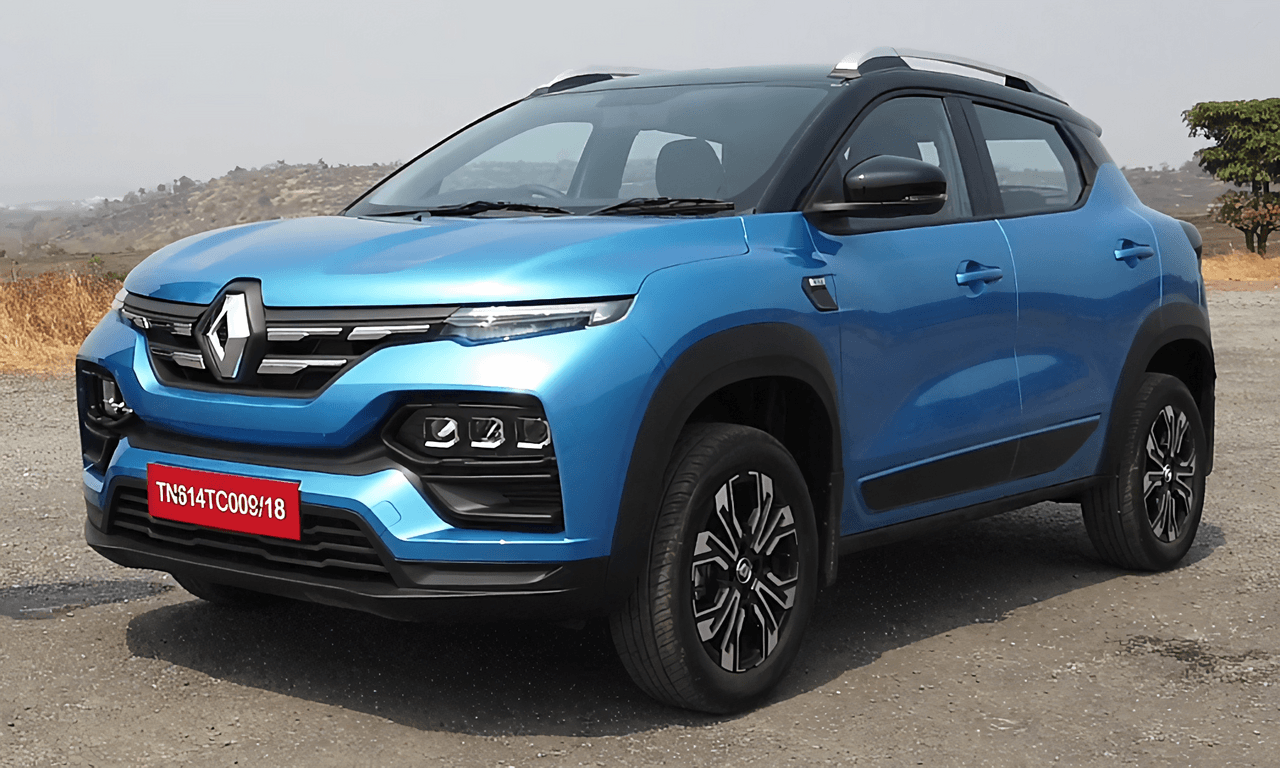
In Nepal, the Renault Kwid currently sits as the brand’s most affordable car, priced at Rs 26.79 lakh – Rs 28.49 lakh across three variants. The 1.0 RXT-O MT is Rs 26.79 lakh, the RXT ‘O’ MT Climber is Rs 27.89 lakh, and the RXT ‘O’ AMT Climber tops the range at Rs 28.49 lakh. That places it below the Renault Kiger at Rs 29.99 lakh – Rs 42.99 lakh, the Renault Triber at Rs 29.99 lakh – Rs 37.99 lakh, and well under the Renault Duster at Rs 46.99 lakh – Rs 50.99 lakh.

Although the model spotted is configured for Brazil, the updated Kwid is likely to reach India at a later stage. Kwid remains an important entry-level product for Renault India, with prices currently ranging from around Rs 4.5 lakh to Rs 5.6 lakh, ex-showroom. However, its sales have declined considerably, with only 516 units sold in India last month, indicating that the current model is struggling to attract buyers. A facelift with fresher styling, a TFT instrument display, and an updated infotainment system could help renew customer interest.

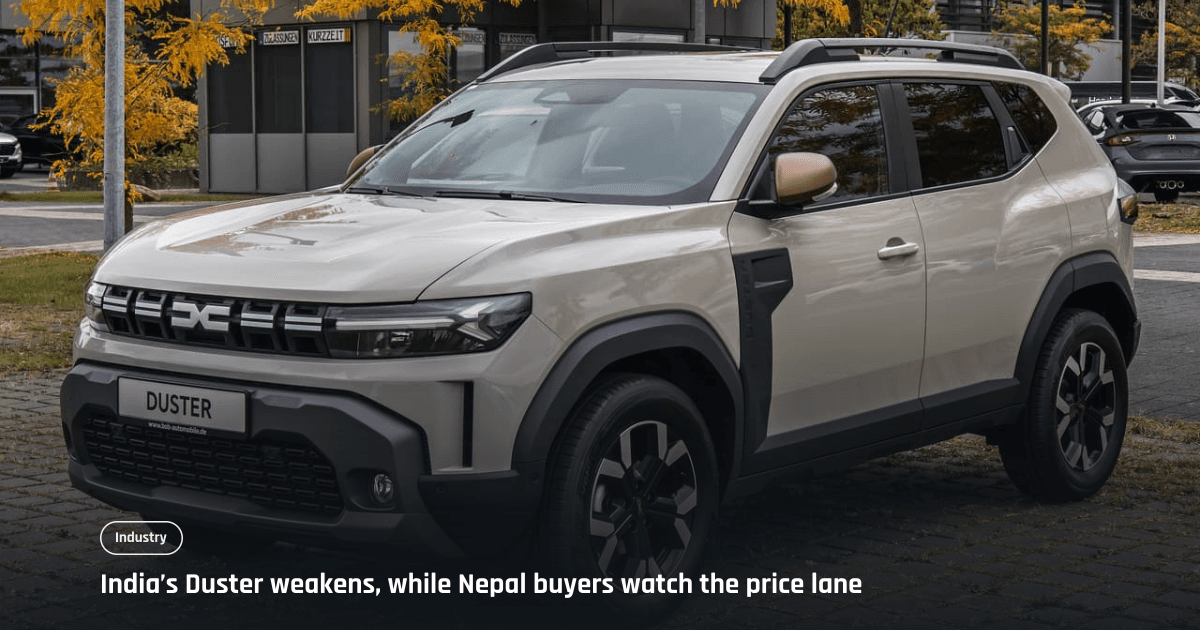
Renault’s immediate focus is on expanding its SUV portfolio, with the new Duster already launched and its hybrid version expected around Diwali 2026. A new seven-seater SUV is planned for mid-2027, followed by a sub-four-metre Bridger-based SUV around Diwali 2027. With these launches taking priority, the Kwid facelift could arrive between or after Renault’s upcoming SUVs. There is no official confirmation yet, but the model’s importance to Renault’s entry-level portfolio—and its need for a sales revival—make an eventual India launch likely.
Writes on vehicle pricing, taxation and the Nepali auto market from ongoing tracking of distributor price lists. Every price in this piece is read live from the Nepal AutoMart catalog — how we verify prices.