
Start with the numbers
The model, at a glance
Available variants, with prices in Nepalese rupees.
| Vehicle | Ex-showroom price | Fuel | Selected variant |
|---|---|---|---|
| 01Honda Dio | Rs 2.7 lakh | Petrol | STD |
Ex-showroom prices exclude registration, road tax and insurance. Specifications can vary by trim. See individual source-check dates ↓
Where The Dio Fits In Nepal's Crowded Scooter Lineup
Honda has sold the Dio in Nepal since 2017 through its authorised distributor, Syakar Trading Company, and in that time it has carved out a specific identity: it is the sporty, younger-skewing alternative to the more sensible Honda Activa sitting alongside it in the same showrooms. Priced between Rs 2,64,900 for the Standard variant and Rs 2,84,900 for the Deluxe, the Dio sits squarely in the mainstream 110cc scooter bracket that dominates urban Nepal, competing for the same buyer who might otherwise look at a Ntorq or an Activa. It isn't trying to be a performance machine, and it isn't trying to be the cheapest scooter on the lot either — it is aiming at buyers who want something that looks good parked outside a college or office and still makes financial sense at fuel-up time.
That positioning matters because Kathmandu's traffic and Nepal's patchwork road surfaces punish scooters that get either the ergonomics or the low-speed manners wrong. The Dio has been engineered with exactly this kind of use in mind, and it shows in almost every part of the package, from the underbone frame to the suspension tuning.
Sharp Cowl, Chrome-Ringed Headlight, And A Sporty Stance
The Dio's front end is the first thing that sells it. The front cowl carries integrated LED daytime running lights that switch on the moment the key is turned, flanking a main headlight unit that also uses LED illumination with chrome detailing inside the housing. It's a design choice that gives the front a noticeably more premium look than the price tag would suggest, and it's a big part of why the Dio reads as "sporty" rather than "practical" the way the Activa does.
Panel graphics change depending on the colour chosen, reinforcing the sense that this is a scooter meant to be personalised rather than just used. Look closer at the front apron sides and around the instrument cluster and you'll find a carbon-fibre textured finish — a small touch, but one that adds visual richness without inflating the price. Around the back, split grab rails and a chunky halogen tail light round off a design that still looks current years after launch. Build quality across the panels feels consistent with what Honda buyers expect: tight panel gaps, no obvious flex in the body plastics, and hardware that doesn't rattle loose after a few thousand kilometres of city use.

Five Colours, And The Dual-Tone Grey Is The One To Look For
The Dio is available in five shades: Imperial Red Metallic, Matte Sangria Red Metallic, Matte Axis Grey Metallic, Pearl Igneous Black, and Pearl Deep Ground Gray. Each carries its own graphics treatment, so the "sporty" character of the scooter genuinely varies by colour rather than being a single fixed look across the range.
Pearl Deep Ground Gray deserves particular mention. It runs a dual-tone treatment with piano black detailing on the front apron, and it's the shade that best shows off the scooter's sharper design lines without shouting for attention the way the reds do. For buyers who want the sporty silhouette but a more grown-up colour statement, this is the pick; those who want the Dio to look every bit as young as it's marketed should lean toward the metallic reds instead.
What The Extra Rs 20,000 On The Deluxe Actually Buys You
The gap between the Standard at Rs 2,64,900 and the Deluxe at Rs 2,84,900 comes down almost entirely to the instrument cluster and the technology wrapped around it. The Deluxe gets a digital TFT display showing an eco indicator, RPM, speed, trip data, fuel level and time — genuinely useful information laid out clearly, and a step up from what most 110cc scooters offer at this price point. A toggle switch on the left handlebar lets the rider cycle through display brightness, light/dark/auto themes, and maintenance alerts that flag upcoming service intervals and oil changes.
The multi-function key switch is one of the Dio's quieter strengths. Beyond ignition and steering lock, dedicated buttons release the seat and the external fuel lid, so filling up no longer means lifting the seat and hunting for the tank cap underneath — a genuinely daily-use convenience rather than a showroom gimmick. There's also an engine start/stop switch on the right handlebar, and a front glove box on the left side houses a USB charging port for keeping a phone topped up on the move.
The one gap buyers notice, and rightly so: there's no Bluetooth connectivity anywhere in the system, despite the presence of a full digital screen capable of displaying it. For a scooter this focused on feeling modern, leaving out phone connectivity is the clearest miss in the features list.
A 109.51cc Engine Built For Calm, Not Speed

The Dio's 109.51cc, 4-stroke SI engine produces 5.78 kW at 8,000 rpm and 9.03 Nm of torque at 5,250 rpm, run through PGM-FI fuel injection and an automatic centrifugal dry clutch. On paper these are modest numbers, and in practice the character matches: this is an engine tuned for smoothness and everyday usability rather than outright pace.
What stands out is refinement. The ACG silent starter system means the engine fires up with barely any mechanical noise — no cranking clatter, just a hushed transition from off to idle. That silence carries through into how the engine behaves at speed too; the exhaust note stays quiet and unobtrusive rather than buzzy, which is unusual for a 110cc unit and is arguably the single most Honda-like trait of the whole scooter. Power delivery is entirely adequate for weaving through city traffic, getting up to speed at lights, and holding a steady pace on the open stretches of Kathmandu's ring road, but this was never meant to be the quickest scooter off the line.
Where The Suspension And Wheel Sizes Earn Their Keep
Up front, telescopic forks handle the bulk of the work, while the rear runs a 3-step adjustable hydraulic spring unit that lets riders tune preload depending on load — useful given how often Nepali scooters carry a pillion and some luggage rather than just the rider. The 12-inch front and 10-inch rear wheel combination strikes a sensible balance between stability at speed and manoeuvrability in the tight, congested lanes that define urban riding here.
Ground clearance of 160mm is generous for the class, and it's a spec that translates directly into real confidence over speed bumps, broken tarmac, and the uneven monsoon-damaged patches that show up on almost every Nepali road at some point in the year. The Dio doesn't scrape or bottom out where lower-clearance scooters would, and that alone makes it a more relaxed proposition for anyone riding outside the smoothest parts of the city.
A Seat Long Enough For Two, A Reach Short Enough For Most
At 650mm long, the seat gives both rider and pillion genuine room rather than the cramped perch some 110cc scooters offer. Seat height of 765mm keeps it accessible to a wide range of rider heights, which matters in a market where scooters are often shared across a household rather than owned by one person alone.
The floorboard is reasonably roomy for day-to-day use, but it has a real practical limit: it cannot fit a standard gas cylinder, something plenty of Nepali households genuinely attempt with a family scooter. If that's a regular need, it's worth test-fitting before buying rather than assuming it'll work. The foldable pillion footrests are worth flagging too — they're plastic and rubber on this 110cc model, a step down from the aluminium units Honda fits to the larger 125cc Dio, and it's a visible reminder of where the cost-cutting happened between the two.
The One Spec Where The Dio Falls Behind Its Own Reputation
Both variants of the Dio run 130mm drum brakes at front and rear, backed by Honda's Combi Brake System for more balanced stopping power between the two wheels. CBS is a genuine safety plus and works well in everyday stop-and-go riding, linking front and rear braking so a panicked single-lever grab doesn't unsettle the scooter.
But there is no disc brake option anywhere in the Dio lineup, on either the Standard or the Deluxe. At this price point, with rivals increasingly offering at least a front disc as standard or optional, this is the clearest and most consistently raised shortcoming of the scooter. It doesn't make the Dio unsafe — CBS does real work here — but buyers who've ridden disc-equipped scooters will notice the difference in outright stopping confidence, particularly two-up or in wet conditions.
Small Storage Details That Add Up Over A Year Of Ownership
Under-seat storage is rated at 18 litres, enough for a half-face helmet along with documents and small items, though not generous enough for a full-face lid and much else besides. The external fuel filling lid, opened via the multi-function key switch, remains one of the Dio's best everyday touches — no lifting the seat, no disturbing whatever's stored underneath, just open the flap and fill up.
Additional storage comes via a small pocket on the right side of the front apron and a deeper one on the left that houses the USB charging port. Two luggage hooks — one on the front apron, one tucked below the front of the seat — round out a practicality package that, while not segment-leading, covers the basics of daily commuting, shopping runs, and short errands without complaint.
Fuel Bills That Justify The Sporty Badge
Real-world fuel efficiency in the 45-50 kmpl range is consistently reported for the Dio, and it's a meaningful number in Nepal's current fuel pricing environment. Combined with the 5.3-litre fuel tank, that efficiency translates into a workable range between fill-ups for most daily commuting patterns, even with the smaller tank size compared to some rivals. The maintenance alert system on the Deluxe's digital cluster is a genuinely helpful ownership touch, nudging riders toward service intervals and oil changes rather than leaving it to memory — something that should, over time, help keep running costs predictable.
Which Variant Actually Makes Sense To Buy
For most buyers, the Deluxe at Rs 2,84,900 is worth the roughly Rs 20,000 premium over the Standard's Rs 2,64,900. The digital TFT cluster alone changes how the scooter feels to live with day to day, and paired with the multi-function key and maintenance alerts, it makes the ownership experience feel meaningfully more current. Buyers on a strict budget who mainly want the styling and the engine refinement without the tech layer will find the Standard perfectly capable, since the mechanical package — engine, brakes, suspension, dimensions — is identical across both variants.
The Honda Activa Is Heavier To Ride But Broader In Appeal
The Honda Activa remains the Dio's most obvious in-house rival, sharing dealership floor space and, often, the same buyer's shortlist. The Dio carries a sportier design language and a lighter, more flickable feel through traffic, where the Activa leans into a more upright, sensible commuter identity that has made it Nepal's best-known scooter nameplate for years. Riders cross-shopping the two are usually choosing between image and outright practicality rather than any dramatic difference in running costs or reliability — both draw on Honda's well-earned reputation for engine longevity.
The TVS Ntorq 125 Brings More Power To The Same Price Bracket
The TVS Ntorq 125 is the other scooter that buyers in this segment routinely cross-shop against the Dio, largely because it leans even harder into the sporty, feature-rich positioning with a larger-displacement engine. Where the Dio counters is with Honda's characteristic engine refinement and the strong real-world fuel efficiency that comes with a smaller, PGM-FI-fed 109.51cc unit — for buyers prioritising running costs and smoothness over outright performance, the Dio remains the more sensible everyday choice.
Our Verdict: A Well-Rounded Scooter Let Down Only By Its Brakes
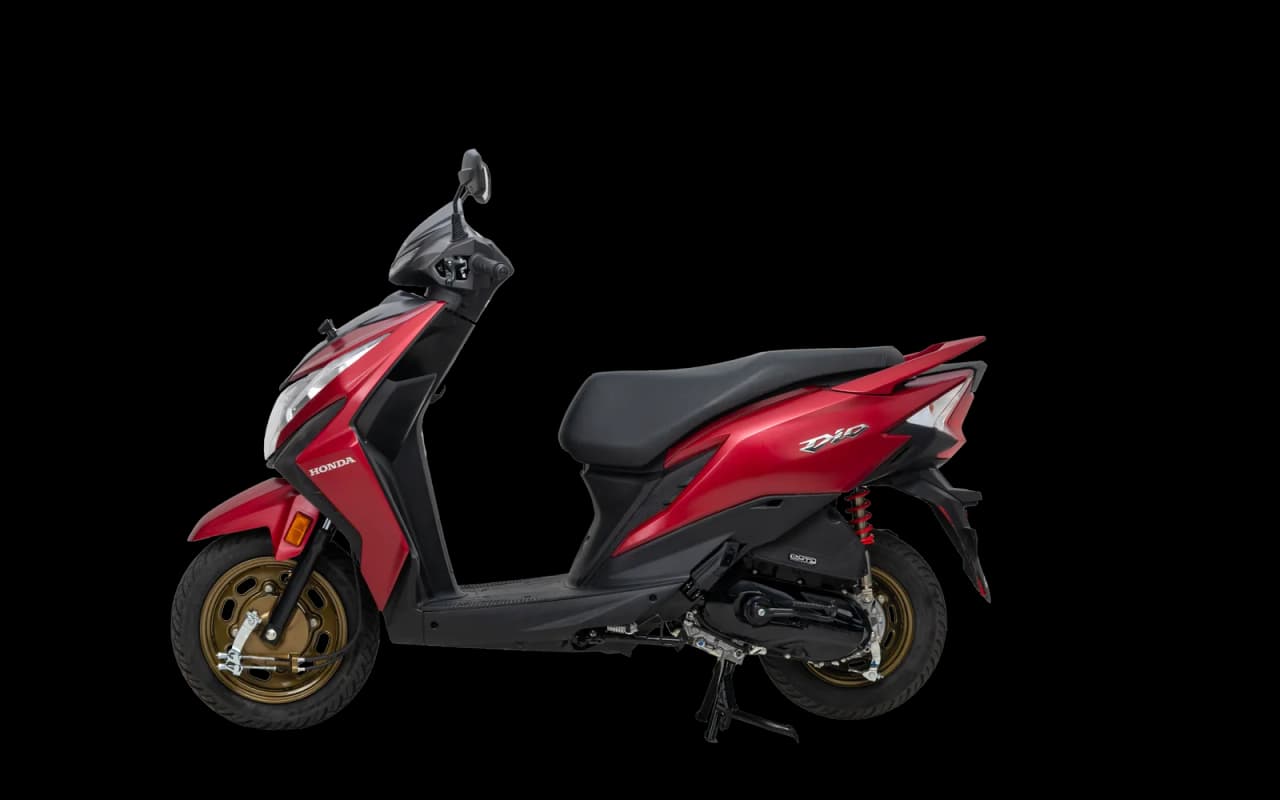
The Honda Dio earns its popularity in Nepal honestly. The engine is genuinely refined, the styling still looks sharp years after launch, the multi-function key and external fuel lid are conveniences that matter every single day, and the Deluxe's digital cluster gives it a premium feel that punches above its price bracket. Ground clearance and suspension tuning are well suited to Nepali road conditions, and the fuel efficiency numbers make it an easy scooter to justify on running costs alone.
The absence of a disc brake option, on either variant, is the one area we'd flag most strongly to prospective buyers, alongside the missing Bluetooth connectivity that feels like an odd omission on a scooter with an otherwise modern digital interface. Neither is a dealbreaker, but both are the honest trade-offs of buying at this price point. For younger riders and daily commuters who want a stylish, efficient, easy-to-live-with scooter and are willing to work within those two limitations, the Dio remains one of the strongest all-round choices in Nepal's 110cc segment.
Explore full specifications, variants & ownership context
Know the product
Key specifications, features & ownership context
Choose a variant to see its recorded specifications and features. Equipment and prices can change across trims.
Latest catalog and directory records supplement the original analysis. Figures may have changed since publication; individual specification and price-check dates appear below.
Rs 2.7 lakh ex-showroom · source checked 30 Sept 2026
Engine & performance
| Specification / feature | STD |
|---|---|
| Engine displacement | 109.51 ccVerified specification · 31 Jul 2026 |
| Max power | 7.9 PSVerified specification · 31 Jul 2026 |
Brakes, tyres & suspension
| Specification / feature | STD |
|---|---|
| ABS | CBSResearched · confirm · 17 Sept 2026 |
Dimensions & weight
| Specification / feature | STD |
|---|---|
| Ground clearance | 160 mmVerified specification · 31 Jul 2026 |
Showroom & service support
Distributor: Syakar Trading Company Pvt. Ltd.
172 listed brand showrooms · 141 listed brand service locations
Listed cities include Attariya, Baglung, Banepa, Barahathawa, Bardaghat, Bardibas and 78 more.
Brand-wide directory coverage. Confirm that your nearest workshop supports this exact model, powertrain and warranty work; ask about parts availability and booking time.
Market buzz & buyer priorities
Compiled discussion, including buyer reactions and ownership reports; this is not a verified owner survey or a reliability score. Research dated 27 Sept 2026.
Concerns to investigate
- Low ground clearance causes issues on uneven Nepali roads and speed breakers
What buyers ask for
- Fuel economy in heavy city traffic
Nepal ownership context
- The scooter is highly favored by students and office goers in Kathmandu for its fuel efficiency
- Maintenance is affordable with spare parts being widely available across most districts in Nepal
- While the 125cc engine handles hills better than the 110cc, the ground clearance remains a limiting factor for rural use
More feedback
- Pricing in Nepal places it in direct competition with the TVS Ntorq 125 and Yamaha RayZR
- Nepali owners generally view resale value, service familiarity and spare-parts availability as stronger than those of less-established scooter brands.
- The scooter is considered suitable for Kathmandu Valley traffic and routine Nepal roads, but suspension feel, tyre condition and headlight performance matter on rough roads, highways and night rides.
- Owner reports suggest that mileage varies with traffic, terrain, riding style, tyre pressure, fuel quality and servicing rather than remaining identical for every rider.
Use these facts alongside the article’s full analysis. Check the final quotation, warranty terms and exact equipment before booking.
Evidence & next steps
Check the details before you buy
Use this guide to build a shortlist. Ask for a written quotation for your chosen variant, including registration, taxes, insurance and finance charges. Confirm the nearest authorised workshop supports that model.
Price sources and dates
These are the recorded distributor-source checks for the selected overview trims. They are separate from the article update and catalog read dates; they do not mean every trim was rechecked today. Confirm the final price with the distributor.
Overview photos come from the corresponding model records; additional article photos carry their own credits. Running costs depend on usage, energy prices, maintenance, insurance and resale value.