Start with the numbers
The model, at a glance
Available variants, with prices in Nepalese rupees.
| Vehicle | Ex-showroom price | Fuel | Selected variant |
|---|---|---|---|
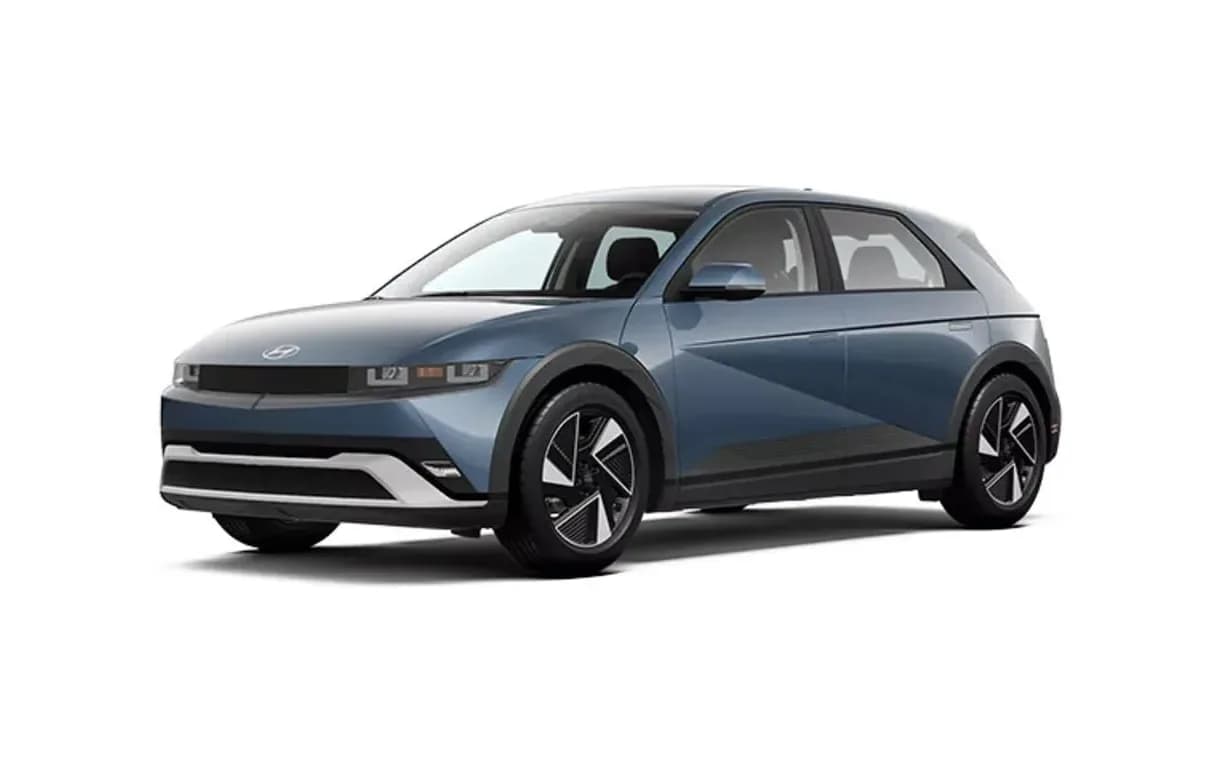
| 01Hyundai Ioniq 5 | Rs 103.96 lakh | Electric | GLS VISION ROOF |
Ex-showroom prices exclude registration, road tax and insurance. Specifications can vary by trim. See individual source-check dates ↓
Where The Ioniq 5 Actually Sits In Nepal's EV Shelf
Hyundai's Ioniq 5 arrived in Nepal in 2022 through Laxmi Intercontinental Pvt. Ltd., and it has sat in an odd place ever since: too expensive to be an everyday EV pick, too interesting to ignore. At Rs 1,03,96,000 ex-showroom for the GLS Vision Roof trim, it isn't competing with budget Chinese crossovers flooding Kathmandu's showrooms. It's competing with buyers who already have a petrol SUV in the garage and want something genuinely different for the daily commute or the office run.
Search interest backs this up. Nepali buyers typing "hyundai ioniq 5 price in nepal" number around 260 a month, more than double the volume for general Ioniq 5 queries. That tells us this is a car people research hard before they commit, not one they walk into a showroom and buy on impulse. Given the price, that makes sense.
A Pixel-Themed Shape That Still Turns Heads
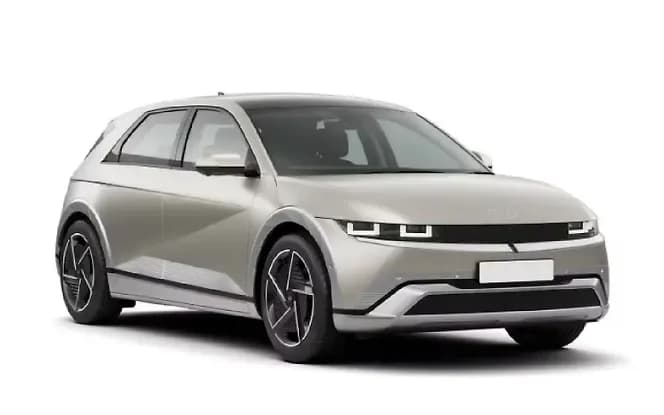
The Ioniq 5's styling hasn't dated since 2022, and that's unusual for an EV this early into its model cycle. The pixel-themed lighting signature front and rear, the sharp creases along the bonnet, and the cab-forward silhouette all look like nothing else on Nepali roads. Parked next to a Hyundai Creta or a Tucson, it reads as a different brand entirely.
The wheel design draws constant comment, and not all of it is positive. The geometric, multi-spoke pattern looks sharp in photos, but the spokes protrude slightly past the tyre sidewall. On Kathmandu's potholed side streets and the tighter lanes of Patan or Thamel, that makes kerb damage a real risk rather than a theoretical one. Buyers used to parking by feel rather than by camera should budget for scuffed alloys eventually.
The flush door handles are a neat touch, popping out automatically once the car is unlocked, though some owners find the mechanism a little exposed-looking when parked in less secure areas. A smaller but real gripe is the lack of a rear wiper on pre-2025 production. Nepal's dusty shoulder seasons and monsoon splash-back mean the rear glass picks up grime fast, and without a wiper it stays visibly dirty between washes, undercutting what is otherwise a clean, futuristic rear end.
Just White, For Now
The Nepali market unit we've seen at distributor level comes finished in a clean white, which suits the car's slab-sided futurism well and hides less dirt than a dark colour would on dusty roads. Matte finishes exist in other markets and look striking in photos, but they are genuinely high-maintenance: they mark easily, show water spots, and need careful hand-washing rather than a quick rinse at the local car wash. For Nepal's road conditions, gloss paint is the easier life, and it's also what's actually available through the authorised channel.
The Cabin Tech That Actually Earns Its Keep
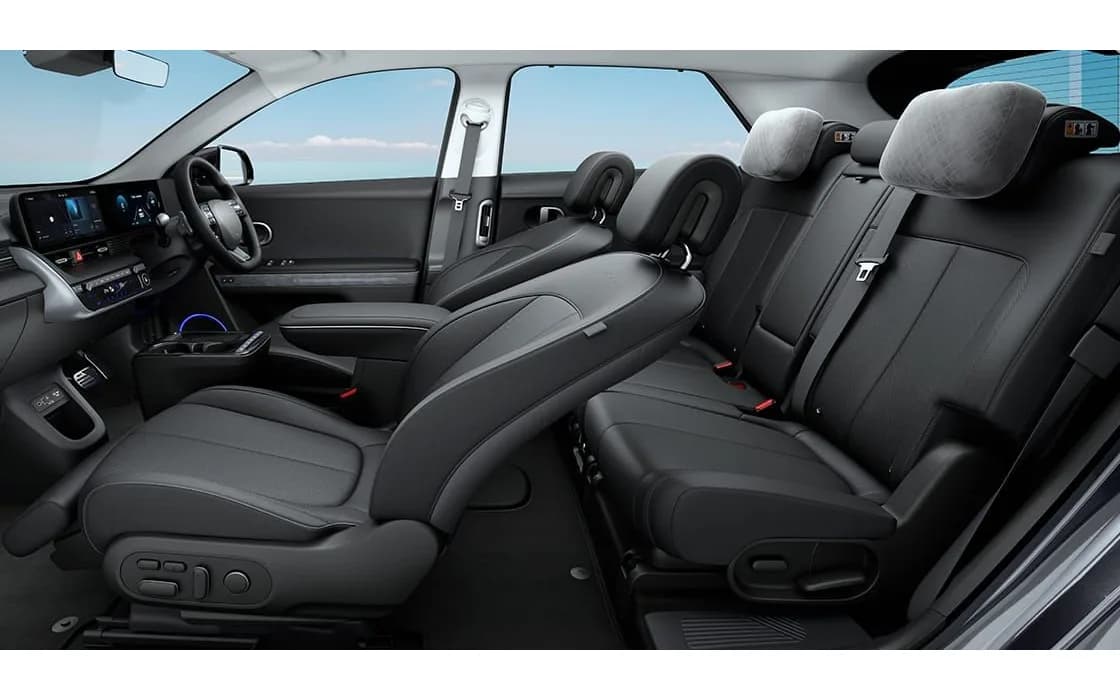
Step inside and the GLS Vision Roof trim's dual-screen setup, a 12.25-inch digital instrument cluster paired with the infotainment display, is immediately legible and doesn't feel gimmicky the way some rival dashboards do. Apple CarPlay and Android Auto are both supported, though on pre-2025 production this needs a wired connection; the later wireless implementation in other markets has reportedly had its own dropout issues, so a cable in the glovebox isn't the worst compromise.
Wireless phone charging is standard, as is the full vision roof that gives this trim its name, a glass panel stretching over both rows that makes the cabin feel noticeably larger than its exterior dimensions suggest. The sliding centre console, badged the "Universal Island," slides forward and back on rails, letting front and rear occupants share or separate storage depending on the trip. It's a genuinely clever piece of furniture design, not just a marketing line.
Less convincing is the touch-sensitive climate control panel. There's no physical ledge to rest a hand on while adjusting temperature on the move, and the glossy surface catches direct sunlight badly, Kathmandu's high-altitude glare included. Where the main dashboard has a usable ledge below the central screen, the HVAC strip below it doesn't, and the inconsistency is noticeable every time you reach for the fan speed at a red light.
Power Delivery That Makes The Price Easier To Accept
Hyundai's own data puts the Ioniq 5 at 0 to 100 km/h in 5.2 seconds, and that number is believable the moment you lean into the accelerator. Electric motors deliver torque instantly, with none of the lag or gear-hunting of a turbocharged petrol SUV, and that makes overtaking on the Prithvi Highway or merging onto the Ring Road genuinely stress-free. The GLS Vision Roof's 100 kW motor isn't the most powerful figure in this segment, but the way it's deployed, smoothly, silently, with zero drivetrain vibration, feels more premium than the number alone suggests.
Claimed range sits at up to 375 km on a single charge, which is comfortable for city use and most intercity hops within Nepal, though mountain driving, cold starts and air-conditioning load will all eat into that figure in practice, as they do for any EV.
Ride Quality That Outclasses The Badge's Price Point, Mostly
The suspension tune on the Ioniq 5 has been revised across its production life, and the result is a ride that feels stable and planted rather than floaty, even over broken surfaces. It's the kind of composure you'd expect from something costing considerably more than a crore. All-wheel-drive versions of the Ioniq 5 globally offer serious grip; the Nepali-spec GLS Vision Roof is a single-motor 100 kW car, so expect sure-footed rather than outrageous handling, which for most buyers and most roads here is exactly the right trade-off.
The car's weight, close to two tonnes in most configurations, does mean tyres wear faster than on an equivalent petrol crossover, and that's worth factoring into running costs.
The real complaint, repeated consistently, is the turning circle. A long wheelbase combined with minimal steering lock makes three-point turns in narrow Kathmandu lanes or tight basement parking genuinely awkward. This is not a car that feels nimble at parking speed, however composed it is at highway speed.
Seats And Space That Punch Above The Badge
Front seats are power-adjustable with a relaxation function on the GLS Vision Roof trim, and they're comfortable enough for long drives, though very tall drivers may feel they're sitting on the car's high floor rather than sunk into it, a quirk of the flat battery-pack architecture underneath. That same flat floor is what makes the rear bench a genuine highlight: no transmission tunnel means proper footroom for a middle passenger, and legroom and headroom are both generous for the car's 4,635 mm length.
Seating capacity is five across the GLS Vision Roof trim, and the eco-processed leather and recycled interior materials used throughout feel deliberate rather than a cost-saving afterthought.
Safety Systems That Try Too Hard
The Ioniq 5 is built on Hyundai's dedicated E-GMP electric platform, engineered specifically around collision safety for battery-electric architecture rather than adapted from a petrol chassis. That's reassuring on paper. In daily use, the safety systems are tuned aggressively, and the constant beeps and warnings for lane departure, following distance and driver attention can grate on a daily commute. Drivers wearing polarised sunglasses may find the driver-monitoring camera struggles to read their eyes, triggering extra alerts for no real reason.
Boot Space That Beats Its Segment On Paper
Boot space comes in at 527 litres, officially verified figure, and is a genuinely useful number for a family EV and is helped by rear seats that slide to free up extra cargo room when the back bench isn't full. Cabin storage is equally thought through: the glovebox opens like a drawer rather than a flap, swallowing far more than a usual glovebox, and the sliding centre console adds deep bins on top of regular door pockets. One small omission buyers notice: there's no dedicated sunglasses holder anywhere in the cabin, an odd gap in an otherwise storage-rich design.
What Ownership Actually Costs Here
Hyundai backs the Ioniq 5 with an 8-year or 160,000 km battery warranty and a 3-year or 100,000 km vehicle warranty, both solid by Nepali standards for a car this new to the market. Charging architecture is rated at 350 kW DC, with a 10-80% top-up claimed at around 18 minutes, assuming access to a charger of that capacity, which remains rare outside Kathmandu valley right now.
That's the real running-cost caveat for Nepal. Fast-charging infrastructure outside the main cities is thin, and buyers without home or office charging access will find ownership considerably harder than the spec sheet suggests. Insurance on an EV of this value also tends to run higher than on an equivalent petrol SUV, and tyre wear, given the car's weight, adds to the cost of keeping it on the road. Nepali buyers have also flagged the import duty structure on EVs as pushing the price well above what the same car costs in other markets, a frustration that comes up often in owner discussions even if it isn't something Hyundai or the distributor controls directly.
One Trim, One Clear Choice
Nepal gets the Ioniq 5 in a single configuration: the GLS Vision Roof, at Rs 1,03,96,000 ex-showroom with a 100 kW motor. There's no stripped-down base trim to cross-shop against, which simplifies the decision but also means the full vision-roof glass, power seats and premium interior materials aren't optional extras, they're simply what buying an Ioniq 5 here means. If the price fits the budget, there's no lesser version waiting to disappoint later.
The MG U9 EV Undercuts It On Raw Power

The MG U9 EV is the obvious cross-shop for buyers shopping at this price bracket in Nepal, and on paper it's a different animal entirely, with a 325 kW motor dwarfing the Ioniq 5's 100 kW output. Pricing for the U9 EV isn't yet confirmed through official channels, so a direct rupee-for-rupee comparison isn't possible today, but the power gap alone tells you the U9 EV is positioned as the performance flagship while the Ioniq 5 leans into refinement, design and everyday usability instead.
The Deepal E07 Is The Value Question Mark

The Deepal E07 carries a 190 kW motor, again comfortably ahead of the Ioniq 5's 100 kW figure, and like the U9 EV its Nepali pricing remains unconfirmed at time of writing. For buyers less fixed on the Hyundai badge and more focused on raw output per rupee, the E07 is worth cross-checking once pricing firms up, though Hyundai's warranty terms and established service network in Nepal remain a real point in the Ioniq 5's favour.
The BYD Sealion 7 Matches It On Motor Output
The BYD Sealion 7 is the closest match on paper, with a 100 kW motor identical to the Ioniq 5's Nepali-spec output. Pricing comparison again isn't possible since Sealion 7 figures aren't yet confirmed locally, but with matched motor output, the decision between the two is likely to come down to interior execution, charging speed, and brand backing rather than straight-line performance.
Verdict
The Ioniq 5 is one of the most convincingly engineered EVs available in Nepal today, with genuine strengths: fast 350 kW charging, a cabin that feels designed rather than assembled, instant and smooth power delivery, and a battery warranty that should outlast most buyers' ownership period. Hyundai's service presence across 80 showrooms and 35 service centres locations nationwide also means this isn't a car you'll struggle to get serviced.
But Rs 1.04 crore ex-showroom is a serious number, and it buys a car with a genuinely awkward turning circle, fiddly touch climate controls, and a ground clearance that Nepali buyers consistently flag as tight for local roads. It suits a buyer with reliable home or office charging, realistic expectations about highway range, and a budget where a crore-plus EV isn't a stretch. For anyone without charging access sorted first, this is the wrong car regardless of how good the rest of the package is.
Explore full specifications, variants & ownership context
Know the product
Key specifications, features & ownership context
Choose a variant to see its recorded specifications and features. Equipment and prices can change across trims.
Latest catalog and directory records supplement the original analysis. Figures may have changed since publication; individual specification and price-check dates appear below.
Rs 103.96 lakh ex-showroom · source checked 7 Oct 2026
Battery & charging
| Specification / feature | GLS VISION ROOF |
|---|---|
| Battery | 58 kWhResearched · confirm · 11 Sept 2026 |
| Claimed range | 384 km (WLTP)Researched · confirm · 11 Sept 2026 |
Safety & driver assistance
| Specification / feature | GLS VISION ROOF |
|---|---|
| Airbags | 7 airbagsResearched · confirm · 11 Sept 2026 |
Dimensions & weight
| Specification / feature | GLS VISION ROOF |
|---|---|
| Ground clearance | 163 mmResearched · confirm · 22 Sept 2026 |
Claimed range uses the stated test cycle. Different cycles are not a like-for-like range comparison; actual range depends on roads, load, speed and weather.
Showroom & service support
Distributor: Laxmi Intercontinental Pvt. Ltd.
80 listed brand showrooms · 35 listed brand service locations
Listed cities include Bhairahawa, Bhaktapur, Bharatpur, Biratnagar, Birgunj, Birtamode and 12 more.
Brand-wide directory coverage. Confirm that your nearest workshop supports this exact model, powertrain and warranty work; ask about parts availability and booking time.
Market buzz & buyer priorities
Compiled discussion, including buyer reactions and ownership reports; this is not a verified owner survey or a reliability score.
No substantive market-feedback summary is recorded yet. Ask recent owners about their usage, service experience and recurring costs.
Explore Hyundai Ioniq 5 market buzz ↗Use these facts alongside the article’s full analysis. Check the final quotation, warranty terms and exact equipment before booking.
Evidence & next steps
Check the details before you buy
Use this guide to build a shortlist. Ask for a written quotation for your chosen variant, including registration, taxes, insurance, finance charges and any charger installation. Confirm the nearest authorised workshop supports that model.
Price sources and dates
These are the recorded distributor-source checks for the selected overview trims. They are separate from the article update and catalog read dates; they do not mean every trim was rechecked today. Confirm the final price with the distributor.
Overview photos come from the corresponding model records; additional article photos carry their own credits. Running costs depend on usage, energy prices, maintenance, insurance and resale value.