
Start with the numbers
The model, at a glance
Top available variants, with prices in Nepalese rupees. Expand details to choose another variant.
| Vehicle | Ex-showroom price | Fuel | Selected variant |
|---|---|---|---|
| 01Hero Splendor Plus | Rs 2.4 lakh | Petrol | SPL + i3S BS6 |
Ex-showroom prices exclude registration, road tax and insurance. Specifications can vary by trim. See individual source-check dates ↓
Where This Bike Sits In Nepal's Commuter Pile-Up
The Hero Splendor Plus has been sold in Nepal since 2019 through CG Motors Pvt. Ltd., and it occupies the price band every Nepali motorcycle buyer eventually has to think about: just above Rs 2 lakh, where a first bike or a family's second bike gets bought on instinct and word of mouth rather than spec sheets. Three variants span Rs 2.18 lakh to Rs 2.4 lakh ex-showroom, all built around the same 97.2 cc engine. There is no scooter-rival price overlap here, no EV distraction. This is a 100cc commuter competing purely on running cost, reliability, and how little it asks of its owner.
It is not trying to be quick or modern. It is trying to be the bike your mechanic already knows how to fix, and in Nepal that counts for a lot.
A Shape That Has Barely Moved, And A Finish That Still Looks The Part
The Splendor Plus carries Hero's familiar commuter silhouette: a tubular double-cradle frame, a blacked-out engine, and a chrome exhaust shield that still shows up on special editions and base trims alike. The 3D 'Hero' and 'Splendor+' badging on the tank and side panels is picked out with gold accents on higher trims, giving a bike that is mechanically ordinary a bit of showroom presence it wouldn't otherwise have.
Build quality leans utilitarian rather than premium. A metal chain cover guards the drivetrain from dust and slush, which matters more on Tarai roads and monsoon commutes than any styling touch. The alloy wheels on the top-spec SPL + i3S BS6 carry pinstriped graphics that lift the overall look, while the side utility box gets a small chrome 'Programmed FI' badge marking out the fuel-injected models from the old carburetted ones. None of this changes how the bike rides, but it does explain why the Splendor Plus still looks current parked outside a showroom next to bikes launched years after it.
Colour options vary by trim and model year at the dealership; buyers should confirm current paint choices with CG Motors before booking, since special editions have historically added grey-and-gold schemes alongside Hero's usual palette.
What You Actually Get On The Dash
Equipment is deliberately basic. All three variants get an analog instrument cluster with speedometer, odometer, and fuel gauge, backed by warning lights for neutral, engine check, high beam, i3S, and side stand. There is no digital Xtec screen here, and buyers hunting for one will need to look at Hero's other models — this is a recurring criticism across the range, and it is fair.
Both i3S-equipped variants (the SPL + i3S BS4 at Rs 2.17,900 and the SPL + i3S BS6 at Rs 2,39,900) get Hero's idle start-stop system, operated through a dedicated switch on the right handlebar, which cuts the engine at traffic stops to save fuel in Kathmandu's stop-start jams. The Splendor Plus BS6 FI, also at Rs 2,17,900, skips i3S but keeps the same fuel-injected engine.
Lighting across the range stays halogen, with pilot lamps and clear-lens indicators in white housings — functional, not flashy. Electric start with kick-start backup is standard, a sensible hedge against a cold battery on a winter morning in the hills.
The 97.2cc Engine: Modest Numbers, Proven Behaviour
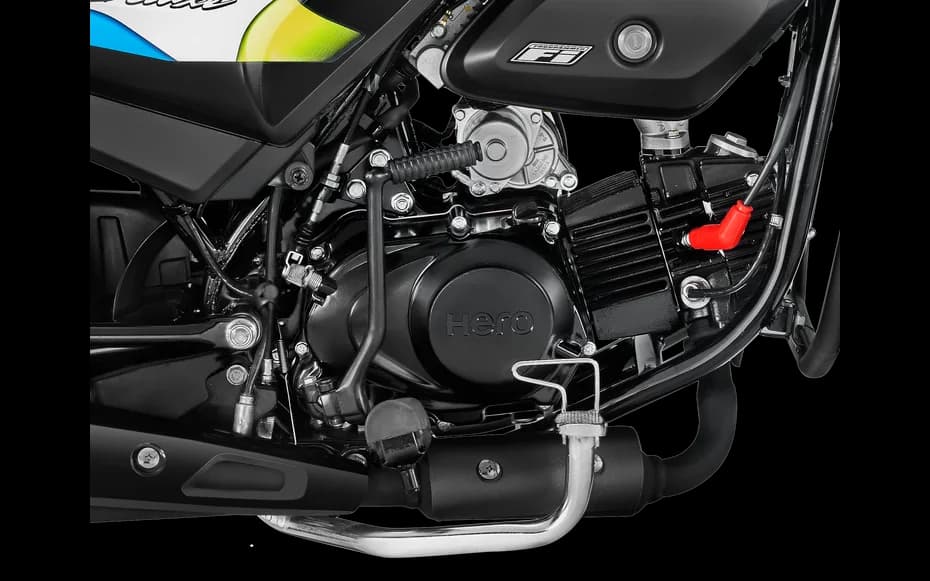
The air-cooled, single-cylinder, four-stroke OHC engine displaces 97.2 cc and makes 5.9 kW at 8,000 rpm with 8.05 Nm of torque at 6,000 rpm, fed through programmed fuel injection on the FI variants. Power delivery is tuned for low-end tractability, not top speed, which suits Nepal's mixed terrain better than a peakier engine would. A four-speed constant-mesh gearbox and a wet multiplate clutch keep gear changes light, something that matters on a bike that will spend most of its life in first and second gear through town traffic.
No mechanical changes have been made to this engine in years, and that is by design rather than neglect. Hero has treated this motor as a settled, proven unit rather than something that needs regular reinvention, and the mileage figures below are the payoff for that conservatism.
Suspension Tuned For Potholes, Not Corners
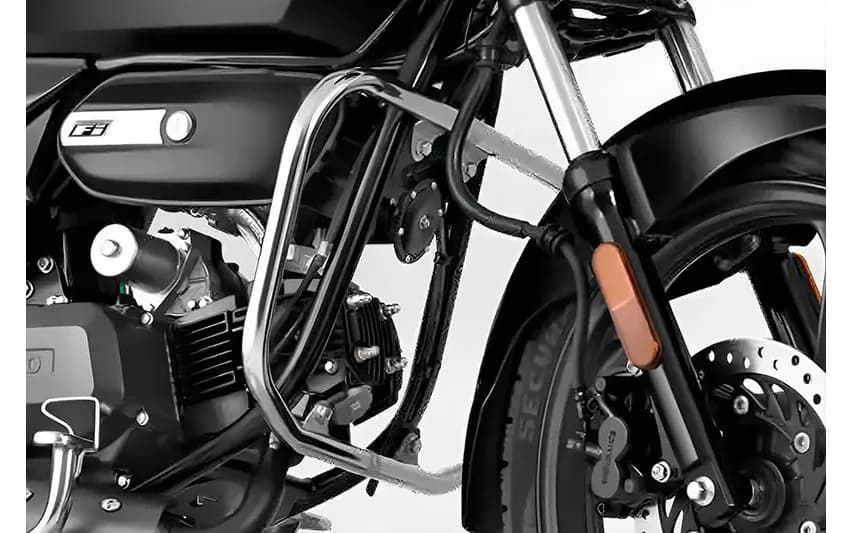
Telescopic hydraulic forks sit up front, with a swingarm and 5-step adjustable hydraulic shock absorbers at the rear — a setup that has not changed meaningfully across recent model years. Ride quality is tuned for broken urban roads and unpaved stretches rather than cornering composure. The Splendor Plus isn't built to be flicked through switchbacks; it is built to absorb a pothole in Kalanki without unsettling the rider.
The 165 mm ground clearance helps on rutted roads and speed bumps, and the 1,236 mm wheelbase keeps things stable at commuter speeds. Tyres are 80/100-18 tubeless front and rear, mounted on alloy wheels on the higher trims — a sensible choice given how often tubeless rubber avoids a roadside puncture repair on Nepali highways.
A Seat Height And Riding Position That Suit Almost Everyone
At 785 mm, the seat height is low enough that riders well under average height can plant both feet flat at a stop, which matters on a bike that will be ridden by teenagers, parents, and delivery riders alike. The 733 mm seat itself is long enough to shift position on longer rides, and the upright bar position keeps wrist strain low on a 40-minute commute.
Kerb weight is a claimed 112 kg, light enough to be easy to park, u-turn, and wheel through a narrow gully, which is exactly the kind of low-speed manoeuvring this bike spends most of its life doing in Nepali cities.
Drum Brakes Are The One Spec Buyers Keep Flagging
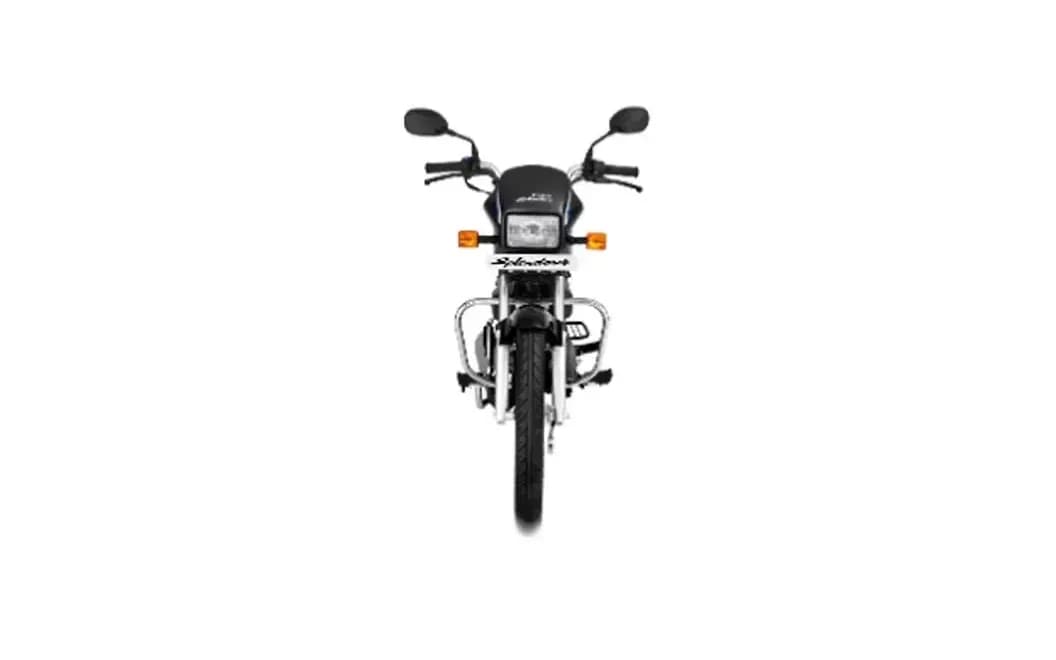
Every Splendor Plus variant, including the Rs 2.4 lakh top trim, uses drum brakes front and rear — 130 mm at both ends — with no disc option and no ABS. Hero calls the rear setup an Integrated Braking System, which links front and rear braking input, but it does not replace the stopping power or feedback of a disc. This is the single most consistent complaint about the bike across its price bracket, and it is a legitimate one. Riders doing regular highway speeds or carrying a pillion regularly should factor this into the buying decision.
The front mudguard carries side reflectors for visibility, a small but sensible addition for evening commutes in cities where streetlighting is inconsistent.
Daily Usability: Grab Rails, Chain Covers, And Not Much Else To Worry About
Practicality here is about reducing maintenance headaches, not adding gadgets. The metal chain cover keeps dust and grime off the drivetrain, a genuine durability advantage on dusty Tarai roads and monsoon slush alike. A rear grab rail makes pillion riding more secure, standard fare for a family commuter. Fuel tank capacity is 9.8 litres across the range, enough for several days of city riding between fill-ups.
Running Costs: Where The Splendor Plus Actually Wins
This is the section that justifies the badge on the tank. Official figures put mileage at approximately 60-65 kmpl, with the Splendor Plus BS6 FI variant specifically claimed at up to 70 km/l under standard conditions — among the better figures in its displacement class sold in Nepal. The SPL + i3S BS4 is claimed at 65 km/l. At Nepali fuel prices, that difference compounds meaningfully over a year of daily commuting, and it is the single biggest reason this bike keeps selling despite a design that has barely moved in years.
Hero backs the engine and drivetrain with a 5-year or 70,000 km warranty, whichever comes first — a genuinely long cover period for this price bracket, and one that should ease worries about fuel-injection system reliability as the bike ages. Spare parts and servicing are widely available through Hero's network, which spans cities including Kathmandu, Lalitpur, Bhaktapur, Pokhara, Birgunj, Banepa, and Bhairahawa, making this one of the easier bikes to keep running outside the Valley.
Three Variants, And Which One Actually Makes Sense
- Splendor Plus BS6 FI — Rs 2,17,900, 97.2 cc, no i3S, claimed 70 km/l
- SPL + i3S BS4 — Rs 2,17,900, 97.2 cc, i3S included, claimed 65 km/l
- SPL + i3S BS6 — Rs 2,39,900, 97.2 cc, i3S included, alloy wheel graphics, top-spec finish
The two BS4 and BS6 FI variants are priced identically at Rs 2,17,900, which makes the choice between them straightforward: the BS6 FI skips i3S but claims better mileage, while the BS4 keeps idle start-stop. For most Kathmandu or Pokhara buyers sitting in daily traffic, i3S will save more fuel in practice than the mileage gap on paper suggests, making the SPL + i3S BS4 the better pick at that price point.
The SPL + i3S BS6 at Rs 2.4 lakh is the one we'd point serious buyers toward if budget allows. The Rs 22,000 premium over the BS4 buys emissions compliance that will matter for resale and bluebook renewal down the line, plus the sharper alloy wheel graphics and finish. None of the three gets a disc brake or digital cluster, so the decision really comes down to budget and whether i3S matters to your daily ride.
The TVS Wego 110 Offers More Displacement For Similar Money
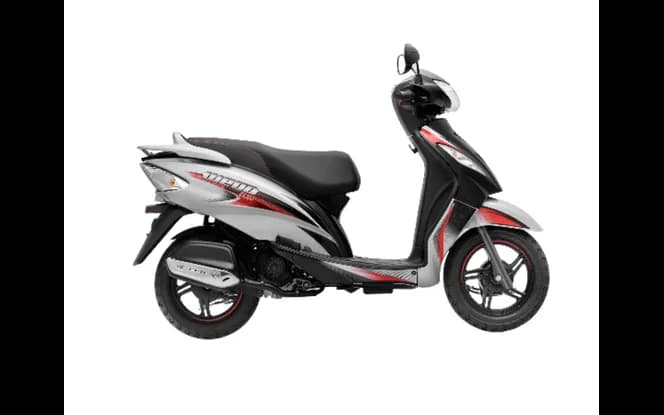
The TVS Wego 110 is a genuine cross-shop for buyers in this bracket, built around a 109.7 cc engine against the Splendor Plus's 97.2 cc. Nepali pricing for the Wego 110 isn't confirmed in our data, so we can't rank the two on value directly, but the displacement gap alone means buyers comparing the two should test ride both before deciding — more cc doesn't always mean more real-world mileage, and Hero's FI tuning on the Splendor Plus is specifically aimed at efficiency over outright performance.
The TVS Radeon Is The More Direct Commuter Match
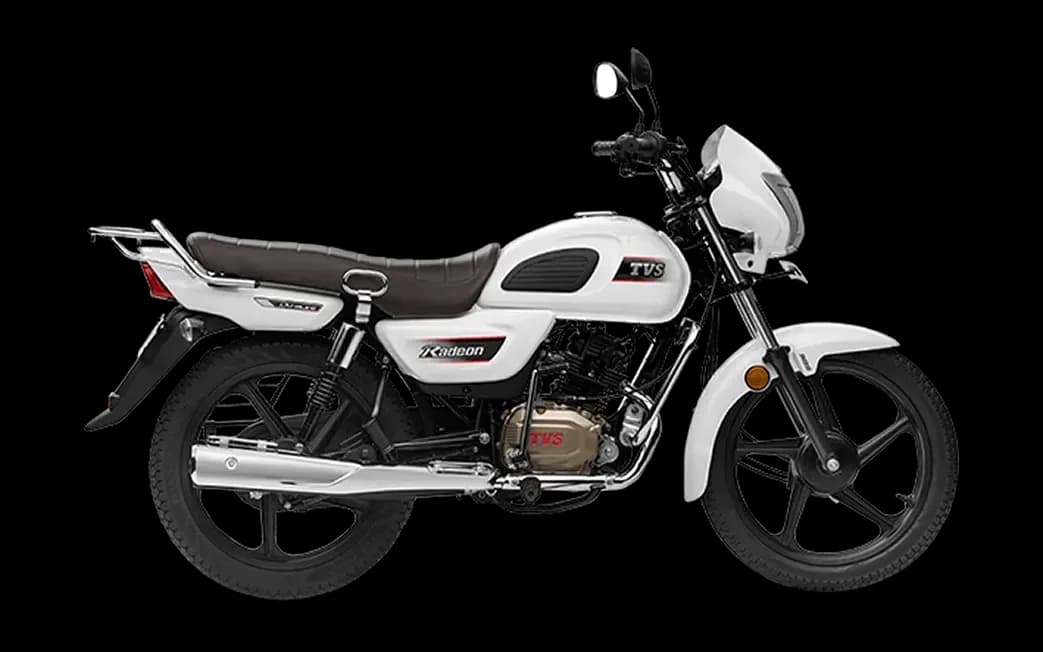
The TVS Radeon, also built around a 109.7 cc engine, sits closer in intent to the Splendor Plus as a no-frills daily commuter rather than a scooter-adjacent runabout like the Wego. Again, price comparison isn't possible with confirmed figures on both sides, but buyers shopping this segment in Nepal should put the Radeon on their shortlist alongside the Splendor Plus specifically for its similar positioning: low running costs, simple mechanicals, wide service availability.
Verdict
The Hero Splendor Plus doesn't try to impress anyone, and that's the point. It is built to deliver cheap, dependable kilometres, backed by a 5-year warranty and one of the widest service networks in Nepal, with the Splendor Plus BS6 FI's claimed 70 km/l standing out even in a frugal class. The analog cluster and drum-only braking across all three variants, including the Rs 2.4 lakh top trim, are real compromises buyers need to accept rather than overlook — there's no disc brake option anywhere in the range, and no digital display even at the top.
For a first-time rider, a family's daily workhorse, or anyone who values mechanic familiarity and resale value over features, the SPL + i3S BS6 at Rs 2,39,900 is the version worth stretching for. Buyers on a tighter budget lose little by choosing the SPL + i3S BS4 at Rs 2,17,900 instead. Riders who want a front disc brake or a digital dash will need to look elsewhere in Hero's own range or at rivals like the TVS Radeon.
Explore full specifications, variants & ownership context
Know the product
Key specifications, features & ownership context
Choose a variant to see its recorded specifications and features. Equipment and prices can change across trims.
Latest catalog and directory records supplement the original analysis. Figures may have changed since publication; individual specification and price-check dates appear below.
Rs 2.4 lakh ex-showroom · source checked 6 Oct 2026
Engine & performance
| Specification / feature | SPL + i3S BS6 |
|---|---|
| Engine displacement | 97.2 ccResearched · confirm · 17 Sept 2026 |
| Max power | 8 PSResearched · confirm · 17 Sept 2026 |
Brakes, tyres & suspension
| Specification / feature | SPL + i3S BS6 |
|---|---|
| ABS | IBSResearched · confirm · 17 Sept 2026 |
Dimensions & weight
| Specification / feature | SPL + i3S BS6 |
|---|---|
| Ground clearance | 165 mmResearched · confirm · 17 Sept 2026 |
Showroom & service support
Distributor: CG Motors Pvt. Ltd.
93 listed brand showrooms · 28 listed brand service locations
Listed cities include Baglung, Banepa, Banganga, Bhairahawa, Bhaktapur, Bharatpur and 39 more.
Brand-wide directory coverage. Confirm that your nearest workshop supports this exact model, powertrain and warranty work; ask about parts availability and booking time.
Market buzz & buyer priorities
Compiled discussion, including buyer reactions and ownership reports; this is not a verified owner survey or a reliability score. Research dated 1 Oct 2026.
What people like
- Exceptional fuel efficiency suitable for long daily commutes
- High resale value in the Nepali second-hand market
- Low maintenance costs and affordable spare parts
More feedback
- Lightweight handling making it easy to maneuver in city traffic
- Reliable engine performance for daily office and delivery use
- Nepali buyers mainly associate the Hero Splendor Plus with strong fuel economy, simple maintenance and dependable daily commuting.
Concerns to investigate
- lack of features like digital meter and disk brake
- Significant price increase compared to older BS4 models
- Dated design that has seen minimal changes over the decades
More feedback
- Thin tires offer limited grip on wet or unpaved Nepali roads
- Basic braking system lacks the bite found in modern competitors
What buyers ask for
- Availability of local mechanics and spare parts
Nepal ownership context
- Hero maintains one of the widest service networks across all seven provinces of Nepal
- The transition to Fuel Injection (FI) requires specialized servicing compared to older carburetor versions
- Remains a top choice for ride-sharing riders (Pathao/Indriver) due to the mileage-to-cost ratio
More feedback
- Ground clearance is adequate for city bumps but requires care on rural rubble roads
- Nepal buyers commonly compare the model on fuel cost, local service access, spare-parts availability and resale value rather than performance or premium features.
- The motorcycle suits regular urban commuting and moderate rough-road use, but buyers needing frequent hill travel or long highway trips may prefer a more powerful model.
Use these facts alongside the article’s full analysis. Check the final quotation, warranty terms and exact equipment before booking.
Evidence & next steps
Check the details before you buy
Use this guide to build a shortlist. Ask for a written quotation for your chosen variant, including registration, taxes, insurance and finance charges. Confirm the nearest authorised workshop supports that model.
Price sources and dates
These are the recorded distributor-source checks for the selected overview trims. They are separate from the article update and catalog read dates; they do not mean every trim was rechecked today. Confirm the final price with the distributor.
Overview photos come from the corresponding model records; additional article photos carry their own credits. Running costs depend on usage, energy prices, maintenance, insurance and resale value.