Start with the numbers
The model, at a glance
Available variants, with prices in Nepalese rupees.
| Vehicle | Ex-showroom price | Fuel | Selected variant |
|---|---|---|---|
| 01Haval / GWM Tank 300 | Rs 159.99 lakh | Hybrid | Tank 300 HEV |
Ex-showroom prices exclude registration, road tax and insurance. Specifications can vary by trim. See individual source-check dates ↓
Where the Tank 300 sits in the Nepali market
The Haval / GWM Tank 300 HEV comes to Nepal as a very clear statement: this is not a soft crossover, it is a proper off-road SUV with a hybrid twist.
With an ex-showroom price of Rs 1.6 crore (Rs 159.99 lakh for the HEV), it sits firmly in the premium off-road segment. Buyers cross-shopping it are usually looking at large Japanese ladder-frame SUVs or high-spec crossovers, and are willing to spend for road presence and capability rather than just seven seats.
GWM's authorized distributor V.G. Impex Pvt. Ltd. lists 20 showrooms and 16 service locations across cities such as Bhaktapur, Bharatpur, Biratnagar, Butwal, Itahari and Kathmandu. That gives the Tank 300 a broader national footprint than most niche imported off-roaders, even if the network is still smaller than long-established brands.
This is a single-variant strategy. Nepal gets the Tank 300 HEV as a top-spec hybrid, no lower trims, no pure petrol option. So the pitch is simple: if you want a neo-retro off-road SUV with hybrid power and full-time 4WD, this is the one.
Looks, design and build
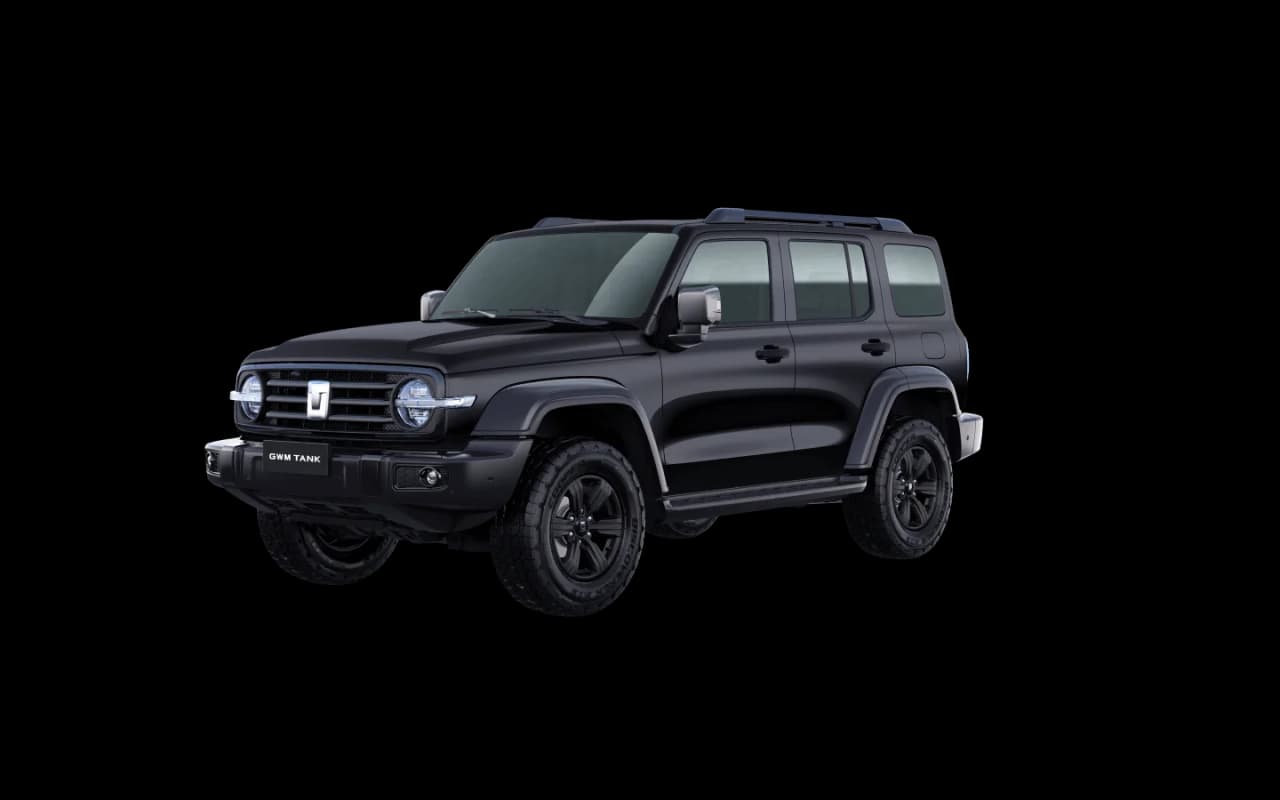
The Tank 300's design is unapologetically boxy. It has a neo-retro, upright stance with a high bonnet, squared-off arches and a tailgate-mounted spare wheel. In Nepali traffic, it stands out against the smoother shapes of typical crossovers. Road presence is strong. People look.
Chunky bumpers and off-road styling cues send a clear message that this is built to go beyond city roads. The claimed 224 mm ground clearance backs that up visually; you can see the height and underbody clearance even in the showroom. Steep village speed breakers and mild trails are well within its comfort zone.
Lighting is fully modern. It gets LED headlamps and tail lamps with distinctive light signatures, which helps night visibility and gives the front a more premium feel than old-school halogen setups. Large alloy wheels are paired with all-terrain tyres, which again align with the off-road intent rather than pure city comfort.
The body-on-frame construction gives it the classic SUV proportions, with a tall roof and near-vertical rear. It feels like a proper truck-based SUV rather than a raised hatchback. That will appeal to buyers who still like the old-school feel but want newer tech.
Features and equipment
Inside, the Tank 300 HEV aims for a premium cabin rather than a bare-bones utilitarian feel. Leather upholstery and soft-touch materials are used across the cabin, and the dashboard has a modern, slightly rugged design with off-road styling elements.
The driver gets a powered seat with multiple adjustments, which helps find a comfortable position despite the high floor typical of ladder-frame SUVs. Dual-zone automatic climate control with rear AC vents takes care of family comfort in the heat. Ambient interior lighting adds a more upmarket touch after dark.
Key convenience and tech highlights include:
- 12.3-inch touchscreen infotainment system
- Electric sunroof
- Electronic parking brake (EPB)
- 360° camera for easier parking and tight manoeuvres
Heated and ventilated front seats are mentioned in the Tank series internationally, and the Nepal-spec HEV is positioned as a fully loaded variant, so buyers should confirm seat functions at the specific showroom, as equipment can vary slightly by batch.
On the safety front, the HEV gets 7 airbags, ABS with EBD, stability control and traction control. There is ADAS (advanced driver assistance) available, including features like adaptive cruise control and lane assist. The exact ADAS feature breakdown can differ by market, so again, a quick feature checklist at the dealer is sensible before you sign.
In short, this is not a stripped-down off-roader. It is closer to a modern premium SUV with off-road hardware added underneath.
Engine, hybrid system and performance

Under the bonnet sits a 2.0L turbo petrol engine with 1998 cc displacement paired with a hybrid electric motor. Combined system output is a strong 351 PS and 648 Nm of torque. That is serious power for a five-seat SUV in Nepal, hybrid or otherwise.
The hybrid system is GWM's Hi4-T setup, which integrates the petrol engine and electric motor with a 9-speed torque-converter automatic transmission and 4WD all-terrain drivetrain. In simple terms, you get:
- Strong low-end torque from the electric motor assisting the turbo petrol
- Multiple power sources for high-altitude climbs and overtakes
- Full-time 4WD for traction on loose surfaces
The claimed mileage figure is 10.3 km/l, which is decent for a body-on-frame off-road SUV with this level of power, but it is not an economy-focused hybrid. Buyers moving from smaller crossovers or diesels should adjust expectations; this is tuned more for performance and capability than sipping fuel.
The hybrid battery has a capacity of 1.7 kWh. This is typical of self-charging hybrids: the battery is relatively small, used mainly to assist the engine, smooth stop-start, and provide short bursts of electric support, not long EV-only driving. There is no standalone EV range claimed; it is not a plug-in.
In Nepali conditions, that means the Tank 300 HEV will feel strong on highways and mountain roads, with good reserve power even when fully loaded. High torque helps during overtakes on the Prithvi Highway or climbing towards hill towns. Drivers who enjoy brisk acceleration and want a bit of future-facing hybrid tech, without giving up off-road hardware, will appreciate this setup.
Ride, handling and comfort

The Tank 300 sits on a ladder-frame chassis, so its ride character is quite different from a soft crossover. You sit high, with a clear, commanding view of the road. Many buyers like that feeling alone.
Ground clearance of 224 mm and the off-road suspension tuning mean it can shrug off bad patches, ruts and broken rural roads more confidently than low-slung city SUVs. It is built to take abuse that would worry a monocoque car.
Handling is more about stability than sharp cornering. A body-on-frame SUV with a tall stance will lean more in bends, and the Tank 300 is no exception. For daily use in Kathmandu and occasional highway runs, it should feel planted and secure, but drivers upgrading from smaller hatchbacks or sedans will need a short adaptation period to get used to the size.
Cabin comfort benefits from the premium seats, dual-zone climate control and rear vents. Wind and tyre noise will be more noticeable than in a low, aerodynamically shaped crossover at high speed, but that is part of the off-road SUV trade-off. For long drives with family, the space, seating position and features matter more than razor-sharp handling for most buyers.
Practicality and running costs
The Tank 300 HEV is a 5-seater with a focus on comfort for those five rather than squeezing in a third row. Boot space is listed at 400 litres, which is usable for luggage on family trips but not huge compared with some seven-seat SUVs. The rear seat has split-folding for extra cargo flexibility when fewer passengers are on board.
Fuel tank capacity is not specified, but with a claimed 10.3 km/l hybrid efficiency, owners should expect running costs more in line with a powerful petrol SUV plus some savings from hybrid assistance in city use. It is not a replacement for a high-efficiency diesel in long-haul commercial use.
The hybrid system uses a 1.7 kWh battery. Because this is a self-charging system, there is no need to hunt for DC fast chargers or install home charging. That simplifies ownership in cities where public charging is still limited. Routine fuel stops and regular servicing remain the main ownership tasks.
GWM's brand presence includes 20 showrooms and 16 service centers nationwide. That helps with access to routine servicing and parts, though the Tank 300 is still a niche model, and not every workshop may yet be fully familiar with its hybrid-specific components. It is sensible to ask which specific service location in your region is trained and equipped for the Tank 300 HEV before you buy.
Warranty terms for the vehicle and the hybrid battery are not clearly broadcast, so buyers should get written confirmation on:
- Standard vehicle warranty years and kilometres
- Hybrid system and battery warranty duration
- Availability and pricing of extended warranty or service packages
Given the premium positioning, long-term coverage can make a meaningful difference to peace of mind.
Price, variant and which one to pick
Nepal currently gets one Tank 300 variant:
- Tank 300 HEV – Rs 159.99 lakh (ex-showroom)
Earlier booking figures hovered around Rs 185 lakh, and the current pricing is described as introductory compared to that older level. Even at this revised price, it is a premium buy.
With only one trim, the usual variant comparison question is simple. If you want the Tank 300, this is the version you get. There is no cheaper entry variant to bring the price under Rs 1 crore, and no non-hybrid alternative.
For buyers who do not need off-road hardware, this price will feel steep compared with monocoque crossovers with more seats or more boot space. For buyers who specifically want ladder-frame construction, 4WD, strong power and hybrid assistance in a single package, the pricing can be justified as a niche but complete offering.
How it compares with real rivals in Nepal
The Tank 300 HEV lives in a narrow niche. On one side are big body-on-frame Japanese SUVs that rely on diesel engines, seven seats and a long reputation. On the other side are premium monocoque crossovers that focus on urban comfort and features, often with two-wheel drive.
Against traditional diesel ladder-frame SUVs, the Tank 300's 351 PS and 648 Nm output is a major advantage. It feels more modern inside, with a larger 12.3-inch touchscreen, electric sunroof, EPB and ADAS. Hybrid tech also gives it a more future-facing narrative than pure diesel.
Against premium crossovers, the Tank 300 offers true off-road hardware, high ground clearance, 4WD and a more rugged feel. Where crossovers prioritise low running costs and car-like handling, the Tank 300 prioritises capability and presence.
There are few direct hybrid off-road rivals at this price in Nepal. That makes the Tank 300 HEV more of a choice based on personal taste and priorities than a spreadsheet-driven comparison. Buyers who value fuel economy above all will find better options. Buyers who value power, image and off-road ability will find the Tank 300 compelling within its niche.
Verdict
The Haval / GWM Tank 300 HEV is a specialist SUV for Nepal. It combines a 1998 cc turbo petrol engine, 351 PS, 648 Nm, hybrid assistance and full-time 4WD in a body-on-frame package that looks and feels like a modern interpretation of classic off-roaders.
For affluent enthusiasts who want strong performance, high ground clearance, serious off-road hardware and a premium, tech-rich cabin, and who are comfortable with a Rs 159.99 lakh price and hybrid fuel economy that is good but not class-leading, the Tank 300 HEV is worth choosing. The key limitation is simple: there is only one high-priced variant, so buyers who want the look and stance but need a significantly lower budget or more focus on economy will have to look elsewhere.
Explore full specifications, variants & ownership context
Know the product
Key specifications, features & ownership context
Choose a variant to see its recorded specifications and features. Equipment and prices can change across trims.
Latest catalog and directory records supplement the original analysis. Figures may have changed since publication; individual specification and price-check dates appear below.
Rs 159.99 lakh ex-showroom · source-check date not recorded
Engine & performance
| Specification / feature | Tank 300 HEV |
|---|---|
| Engine displacement | 1998 ccResearched · confirm · 16 Sept 2026 |
Battery & charging
| Specification / feature | Tank 300 HEV |
|---|---|
| Battery | 1.7 kWhResearched · confirm · 16 Sept 2026 |
Safety & driver assistance
| Specification / feature | Tank 300 HEV |
|---|---|
| Airbags | 7 airbagsResearched · confirm · 16 Sept 2026 |
Dimensions & weight
| Specification / feature | Tank 300 HEV |
|---|---|
| Ground clearance | 224 mmResearched · confirm · 23 Sept 2026 |
Showroom & service support
Distributor: V.G. Impex Pvt. Ltd.
21 listed brand showrooms · 19 listed brand service locations
Listed cities include Bhaktapur, Bharatpur, Biratnagar, Butwal, Itahari, Kathmandu and 9 more.
Brand-wide directory coverage. Confirm that your nearest workshop supports this exact model, powertrain and warranty work; ask about parts availability and booking time.
Market buzz & buyer priorities
Compiled discussion, including buyer reactions and ownership reports; this is not a verified owner survey or a reliability score. Research dated 16 Sept 2026.
What people like
- Strong off-road capability and road presence
- Good power and torque for highway use
- Comfortable, plush interior with lots of features
More feedback
- Seen as a value alternative versus much pricier off-road SUVs
Concerns to investigate
- Fuel economy is a recurring concern
- Price is still considered premium in Nepal
- Boot space and practicality are questioned for family use
More feedback
- Long-term ownership worries focus on service, spares, and resale
- noise and vibration issues around 1500-2000 RPM
Nepal ownership context
- Nepali buyers focus heavily on whether the vehicle is worth the price compared with more established SUVs and on whether service and spare parts will remain manageable.
- Road clearance, off-road ability, and comfort on rough Nepal roads are important purchase points.
- Resale value and long-term maintenance cost are common Nepal-specific concerns for Chinese premium SUVs.
More feedback
- bookings opened in Nepal for HEV Tank 300 and Tank 500 via VG Impex
- GWM Nepal has Kathmandu dealer, after sales service contact in Sankhamul, Lalitpur
Use these facts alongside the article’s full analysis. Check the final quotation, warranty terms and exact equipment before booking.
Evidence & next steps
Check the details before you buy
Use this guide to build a shortlist. Ask for a written quotation for your chosen variant, including registration, taxes, insurance, finance charges and any charger installation. Confirm the nearest authorised workshop supports that model.
Price sources and dates
These are the recorded distributor-source checks for the selected overview trims. They are separate from the article update and catalog read dates; they do not mean every trim was rechecked today. Confirm the final price with the distributor.
Overview photos come from the corresponding model records; additional article photos carry their own credits. Running costs depend on usage, energy prices, maintenance, insurance and resale value.