Start with the numbers
The model, at a glance
Available variants, with prices in Nepalese rupees.
| Vehicle | Ex-showroom price | Fuel | Selected variant |
|---|---|---|---|
| 01Haval / GWM Jolion Max EV | Rs 59.99 lakh | Electric | Jolion Max |
Ex-showroom prices exclude registration, road tax and insurance. Specifications can vary by trim. See individual source-check dates ↓
Where it sits in the Nepali market
The Haval / GWM Jolion Max EV enters Nepal as a mainstream electric SUV with near-premium ambition. At Rs 59.99 lakh ex-showroom, it sits above the bargain EV crowd and asks buyers to think less about entry price and more about cabin size, perceived quality and equipment density.
That positioning matters because Nepal’s EV market is already crowded with compact crossovers, value-led Chinese SUVs and a few more established nameplates trading on badge strength. The Jolion Max EV does not try to win on image alone. Instead, it tries to justify itself with a larger body, more mature proportions and the sort of feature set that can make an EV feel more complete in showroom use.
For buyers cross-shopping in this price band, the real question is not whether it is electric enough. It is whether it feels substantial enough to stand apart from cheaper alternatives while staying understandable to a family buyer who wants one vehicle to do most jobs.
Looks, design and build
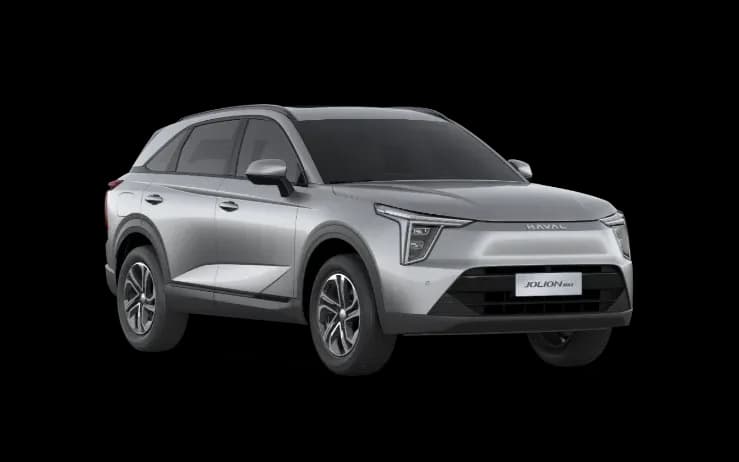
The Jolion Max EV looks like a deliberately grown-up SUV rather than a flashy electric experiment. Its proportions are conservative in a good way: long bonnet, upright cabin, broad stance and enough visual mass to make the price feel less abstract than it would on a smaller car.
That is one of its biggest strengths in the Nepali context. Many EVs in this price band rely on futuristic styling to create interest. The Jolion Max EV instead leans on scale and balance. It should appeal to buyers who want an EV that looks expensive without shouting about it.
The body shell and stance suggest a vehicle aimed at urban family use first, with a design language that is unlikely to age quickly. From a market-tracking standpoint, that is important. The more restrained the styling, the easier it is for a model to remain acceptable over a longer showroom cycle, especially in a market where owners often hold vehicles for several years.
Build impression is best judged in terms of expectation rather than hard laboratory claims. This is a vehicle that appears designed to compete on solid-feeling presentation, tight panel gaps and overall presence rather than dramatic design theatre.
Features and equipment
This is where the Jolion Max EV needs to do a lot of its work. At Rs 59.99 lakh, it must justify itself with equipment that makes daily ownership feel easy and complete.
The exact Nepal-spec equipment list has not been officially disclosed in the provided data, so it is not responsible to invent a trim-by-trim feature sheet. Even so, the broader market expectation for a model like this is clear: a large touchscreen, connected infotainment, automatic climate control, multi-function steering, keyless convenience, a modern driver-information display and a full suite of everyday comfort features are part of the value equation.
What matters more is the overall impression such a car creates in a showroom. The Jolion Max EV has to feel like a step up from the cheapest EVs in terms of interface polish, seat comfort, cabin finish and the richness of its cabin technology. If it does that, it earns its price far better than a car that merely lists more features on paper.
For Nepalese buyers, the biggest feature question is often not whether a car has something, but whether that something will be easy to use, easy to maintain and easy to live with after the first week. That is the standard this SUV must meet.
Motor and performance
Official Nepal figures for the powertrain have not been disclosed in the supplied data, so any exact output claim would be guesswork. Based on the broader international pattern for the Jolion Max EV nameplate, the model is expected to follow a single-motor electric layout aimed at everyday usability rather than outright performance theatre.
That is the right philosophy for Nepal. Most buyers in this class do not need a hot-hatch personality. They need clean low-speed response, predictable throttle control, easy city traffic manners and enough highway reserve for calm overtaking.
The key editorial point is that the Jolion Max EV should be judged as a family electric SUV, not a performance EV. Its value lies in smoothness, instant torque delivery and the absence of gearshift fuss in urban use. If the calibration is sensible, it should feel relaxed rather than frantic.
Because the model is priced as a substantial SUV, it also needs to avoid the cheap, over-light, underdamped feel that can plague some EVs tuned only for brochure appeal. A car at this level should deliver confidence in acceleration response and maintain composure when loaded with passengers.
Ride, handling and comfort
In Nepali ownership, ride quality and cabin comfort often matter more than raw acceleration figures. That is especially true for an EV positioned as a family car rather than an enthusiast product.
The Jolion Max EV’s larger footprint should help it feel settled on the road, with the kind of body control that gives passengers confidence. A longish wheelbase and broader stance usually help an SUV breathe better over broken surfaces, speed humps and mixed urban-road conditions. That matters in Nepal, where buyers regularly move between smooth city streets and far less forgiving roads.
Handling should be judged in the context of family priorities. Buyers in this segment generally want predictable steering, safe lane changes, decent stability at highway speeds and a suspension tune that avoids harshness. A composed chassis is more valuable than sharp cornering ability.
Comfort is likely to be one of the Jolion Max EV’s strongest sales arguments if the cabin packaging is done well. Bigger electric SUVs often succeed when they deliver a quiet, relaxed and spacious environment that makes daily commuting feel more premium than the price tag suggests.
Practicality and running costs
Practicality is one of the main reasons to take the Jolion Max EV seriously. The car’s name suggests a larger derivative of the Jolion family, and the market message is clear: this is meant to feel more usable than a compact crossover.
However, specific Nepal market figures for boot space, ground clearance, battery capacity, charging speed and range have not been officially disclosed in the provided data, so those details should be treated as undisclosed rather than assumed.
What can be said with confidence is that an EV in this bracket should appeal strongly to buyers with predictable daily routines. If charging access is manageable, an electric SUV can reduce routine fuel expense and simplify city commuting. That makes it attractive for private owners who mostly drive between home, office, school runs and weekend errands.
Running costs are the other major attraction. Electric SUVs usually undercut comparable petrol SUVs on routine energy expenditure, and maintenance complexity is generally lower because there is no conventional engine oil cycle, no exhaust system and fewer moving drivetrain parts. For Nepalese buyers, that financial logic can matter as much as the showroom price itself.
The counterpoint is infrastructure and usage pattern. Anyone who does frequent long-distance travel or depends on inconsistent charging access should think carefully before choosing an EV purely for its sticker value.
Price, variants and which one to pick
Only one verified figure is available for Nepal: Rs 59.99 lakh ex-showroom. No official variant hierarchy has been provided, so it is not appropriate to pretend there are multiple trims with confirmed local pricing.
That means the buying decision is simpler than with a multi-variant model. If the equipment list and cabin presentation meet expectations, this single version is likely aimed at buyers who want a well-specified electric SUV without stepping into luxury-brand territory.
Which one to pick? At the current level of disclosed information, the answer is straightforward: the Jolion Max EV makes sense only if you genuinely want a larger, more substantial-feeling EV and are comfortable paying for it. If your priority is lowest entry cost, the market offers cheaper choices. If your priority is badge prestige, there are alternatives as well. This car sits in the middle, appealing to shoppers who value the product itself more than the badge on the bonnet.
How it compares with real rivals in Nepal
The Jolion Max EV’s direct comparison set in Nepal is not defined by size alone. It will mostly be cross-shopped against other electric SUVs and well-equipped Chinese family vehicles in roughly the same price band, plus some petrol SUVs that feel familiar to conservative buyers.
Against cheaper EVs, it should feel more mature, larger and more upmarket in presentation. Against more established premium-name alternatives, it will likely fight on space and specification rather than badge equity. That is a difficult but legitimate middle ground.
The most relevant rival logic in Nepal is this:
- If a buyer wants maximum value per rupee, the Jolion Max EV must justify its price with cabin feel and equipment.
- If a buyer wants the safest resale story, badge-led rivals may still feel easier.
- If a buyer wants a spacious, modern EV without stepping into premium-brand pricing, this Haval/GWM has a real opening.
In other words, it is not the obvious default choice. It is the considered choice.
Verdict: who it suits
The Haval / GWM Jolion Max EV is best understood as a carefully positioned family EV rather than a headline-grabbing one. It should appeal to buyers who want a roomy, polished, sensible electric SUV and are willing to pay Rs 59.99 lakh for a package that feels more substantial than many mainstream alternatives.
Its biggest strengths are its market positioning, expected sense of size and the kind of ownership logic that makes EVs compelling in the first place. Its biggest weakness is the same one many well-equipped Chinese EVs face in Nepal: at this price, buyers will compare it not only with feature lists but also with trust, brand familiarity and long-term confidence.
If the showroom experience matches the promise, the Jolion Max EV is a serious option for families moving up from compact crossovers and wanting a calmer, cleaner, more modern daily driver. If the buyer is purely price-driven, it may feel expensive. If the buyer wants an EV that looks and feels like a proper SUV without entering luxury territory, it deserves a close look.
Explore full specifications, variants & ownership context
Know the product
Key specifications, features & ownership context
Choose a variant to see its recorded specifications and features. Equipment and prices can change across trims.
Latest catalog and directory records supplement the original analysis. Figures may have changed since publication; individual specification and price-check dates appear below.
Rs 59.99 lakh ex-showroom · source-check date not recorded
Battery & charging
| Specification / feature | Jolion Max |
|---|---|
| Battery | 58.3 kWhResearched · confirm · 29 Sept 2026 |
| Claimed range | 420 km (WLTP)Researched · confirm · 29 Sept 2026 |
Dimensions & weight
| Specification / feature | Jolion Max |
|---|---|
| Ground clearance | 190 mmResearched · confirm · 29 Sept 2026 |
Comfort & convenience
| Specification / feature | Jolion Max |
|---|---|
| Touchscreen | 14.6 inResearched · confirm · 29 Sept 2026 |
Claimed range uses the stated test cycle. Different cycles are not a like-for-like range comparison; actual range depends on roads, load, speed and weather.
Showroom & service support
Distributor: V.G. Impex Pvt. Ltd.
21 listed brand showrooms · 19 listed brand service locations
Listed cities include Bhaktapur, Bharatpur, Biratnagar, Butwal, Itahari, Kathmandu and 9 more.
Brand-wide directory coverage. Confirm that your nearest workshop supports this exact model, powertrain and warranty work; ask about parts availability and booking time.
Market buzz & buyer priorities
Compiled discussion, including buyer reactions and ownership reports; this is not a verified owner survey or a reliability score. Research dated 26 Sept 2026.
What people like
- Looks beautiful like a German car
- Electric variant could compete with BYD Atto 3
- High-end interior materials and premium cabin feel compared to rivals
More feedback
- Smooth power delivery from the Dedicated Hybrid Transmission (DHT)
- Significant fuel savings in stop-and-go Kathmandu traffic
- Comprehensive safety suite including a 360-degree camera and ADAS features
- Nepali auto coverage describes the Haval Jolion Max EV as a comfortable and practical family SUV for Kathmandu driving.
- The 190 mm ground clearance is viewed as useful for speed breakers, uneven roads and ordinary potholes in Nepal.
Concerns to investigate
- Concerns about safety and reliability of EVs
- Haval is losing market to other Chinese brands
- Chinese cars are not reliable long-term
More feedback
- Ground clearance is perceived as low for rougher rural Nepali roads
- Uncertainty regarding the long-term resale value of Chinese hybrid vehicles in Nepal
- Infotainment system can be overly complex with too many sub-menus for basic tasks
- A Nepali road review noted light body roll during faster cornering, which may matter to buyers seeking sporty handling.
What buyers ask for
- Fuel efficiency and tax benefits of hybrid technology
- Ground clearance for diverse road conditions
- After-sales service and spare parts availability
More feedback
- Real-world range on Kathmandu-to-hill and highway trips
Nepal ownership context
- Distributed by V.G. Impex with a growing service network in major cities
- The hybrid system is seen as a practical bridge for Nepalese buyers worried about highway charging infrastructure
- Positioned in a competitive price bracket where it faces pressure from both pure EVs and established petrol SUVs
More feedback
- Nepal-specific coverage lists a 58.3 kWh battery, approximately 400-430 km claimed range depending on the published test standard, 6.6 kW AC charging, DC fast charging and vehicle-to-load capability.
- The vehicle is suited to Kathmandu traffic, family use and moderate hill-road travel, while charging access outside major urban areas remains a practical ownership consideration.
- GWM Nepal is expanding its electric-vehicle presence, but service reach, spare-parts availability and resale history are less mature than for established brands such as BYD, Hyundai and MG.
Use these facts alongside the article’s full analysis. Check the final quotation, warranty terms and exact equipment before booking.
Evidence & next steps
Check the details before you buy
Use this guide to build a shortlist. Ask for a written quotation for your chosen variant, including registration, taxes, insurance, finance charges and any charger installation. Confirm the nearest authorised workshop supports that model.
Price sources and dates
These are the recorded distributor-source checks for the selected overview trims. They are separate from the article update and catalog read dates; they do not mean every trim was rechecked today. Confirm the final price with the distributor.
Overview photos come from the corresponding model records. Running costs depend on usage, energy prices, maintenance, insurance and resale value.