Government focus on revenue and infrastructure
FNCCI President Anjan Shrestha has criticized the government's approach to the automobile sector, urging it to be seen not just as a source of revenue but as a crucial transport industry. Speaking at the opening of the NAIMA Mobility Expo 2026 in Kathmandu, Shrestha highlighted that the sector imported goods worth around Rs 106 billion last year and contributed approximately Rs 81-82 billion in government revenue.
Similarly, NADA Automobiles Association of Nepal President Surendra Upreti has urged the government to view the automobile sector as a partner in expanding economic activity. Speaking at the inauguration of the 18th edition of the NADA Auto Show, Upreti noted that the automobile sector provides more than one million direct and indirect jobs and contributes over Rs 90 billion annually to government revenue.
Shrestha emphasized that while vehicle numbers in Kathmandu have risen sharply over the past 25 years, road expansion has not kept pace. He also pointed out that the government often makes major decisions without sufficient consultation with automobile businesses.
Public transport, assembly plants, and infrastructure
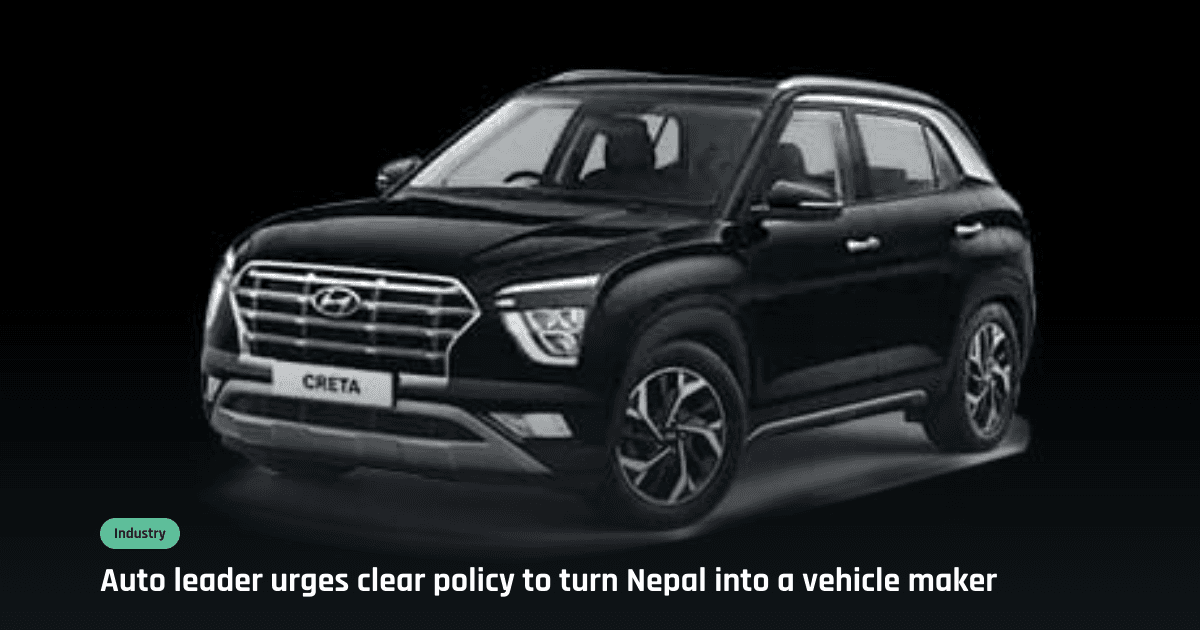
Shrestha noted the current halt in the registration of public transport vehicles, attributing it to the tendency of new governments to make unusual decisions. He called on automobile businesses to invest in local assembly plants in Nepal, citing Hyundai as the only four-wheeler brand with an assembly plant in the country.
Upreti also called on the government to build an international-standard exhibition center in Kathmandu, stating that existing venues like Bhrikutimandap are insufficient for current needs. He urged the government to speed up the plan to upgrade the Bhrikutimandap exhibition center included in the Fiscal Year 2026/27 budget.
Furthermore, Shrestha advocated for reducing the heavy dependence on imported vehicles and spare parts. He suggested that Nepal should focus on local assembly and contract manufacturing to develop and promote the domestic automobile industry. Upreti echoed this sentiment, stressing the need to support vehicles being assembled in Nepal and establish a local component manufacturing industry.
Economic challenges, policy reforms, and modern transport systems
Shrestha expressed concern over Nepal's economic challenges, including a slow market, weak demand, and declining business confidence. He remarked that he had never seen such a difficult situation in his 36 years of business experience. Despite the government's ambitious targets for economic growth, higher per capita income, and job creation, he noted a lack of clear strategies, policies, and action plans.
Upreti highlighted the frequent changes in tax rates and policies that make it difficult for businesses to make long-term plans. He called for greater political stability and suggested that the government should change its approach of treating vehicles as luxury goods, as they have become essential for mobility, businesses, and employment.
Shrestha assured that FNCCI is ready to fully support the government in achieving its target of building a $100 billion economy and creating 1.2 million jobs. Both leaders urged the government to introduce policy reforms based on the concerns of the private sector. Upreti further stressed the need for strict enforcement of traffic rules to reduce road accidents and called for greater focus on flyovers, underpasses, tunnels, and modern transport systems while developing road infrastructure.
Writes on vehicle pricing, taxation and the Nepali auto market from ongoing tracking of distributor price lists. Editorial policy.