Start with the numbers
The model, at a glance
Top available variants, with prices in Nepalese rupees. Expand details to choose another variant.
| Vehicle | Ex-showroom price | Fuel | Selected variant |
|---|---|---|---|
| 01Chery Q EV | Rs 35.99 lakh | Electric | Premium |
Ex-showroom prices exclude registration, road tax and insurance. Specifications can vary by trim. See individual source-check dates ↓
Where This Little EV Fits In Kathmandu's Traffic
Nepal's electric vehicle market has, until now, largely been a tussle between compact hatchback-shaped EVs and slightly larger crossovers jostling for the same buyer's attention. The Chery Q EV, arriving in 2026 through SPG Automobiles Pvt. Ltd. under the Sharda Group, slots itself into a narrower, more specific space: it isn't trying to be a family crossover or a highway cruiser. At 4,195 mm long, it's a proper city car, and everything about its engineering — the 90 kW motor, the 41.2 kWh battery, the modest top speed — points to a vehicle built for Kathmandu's ring road, Pokhara's lakeside stretches, and the daily grind of narrow lanes and tight parking, not long expedition drives to Mustang or Rara.
Priced between Rs 34.49 lakh and Rs 35.99 lakh across its Comfort and Premium variants, the Q EV positions itself as a premium proposition rather than a budget one. That's an important distinction for Nepali buyers to internalise early: this isn't the cheapest EV on the market, but it is trying to justify its price through cleverness and design rather than sheer size or range.
A Design That Borrows Confidently From Mini Cooper
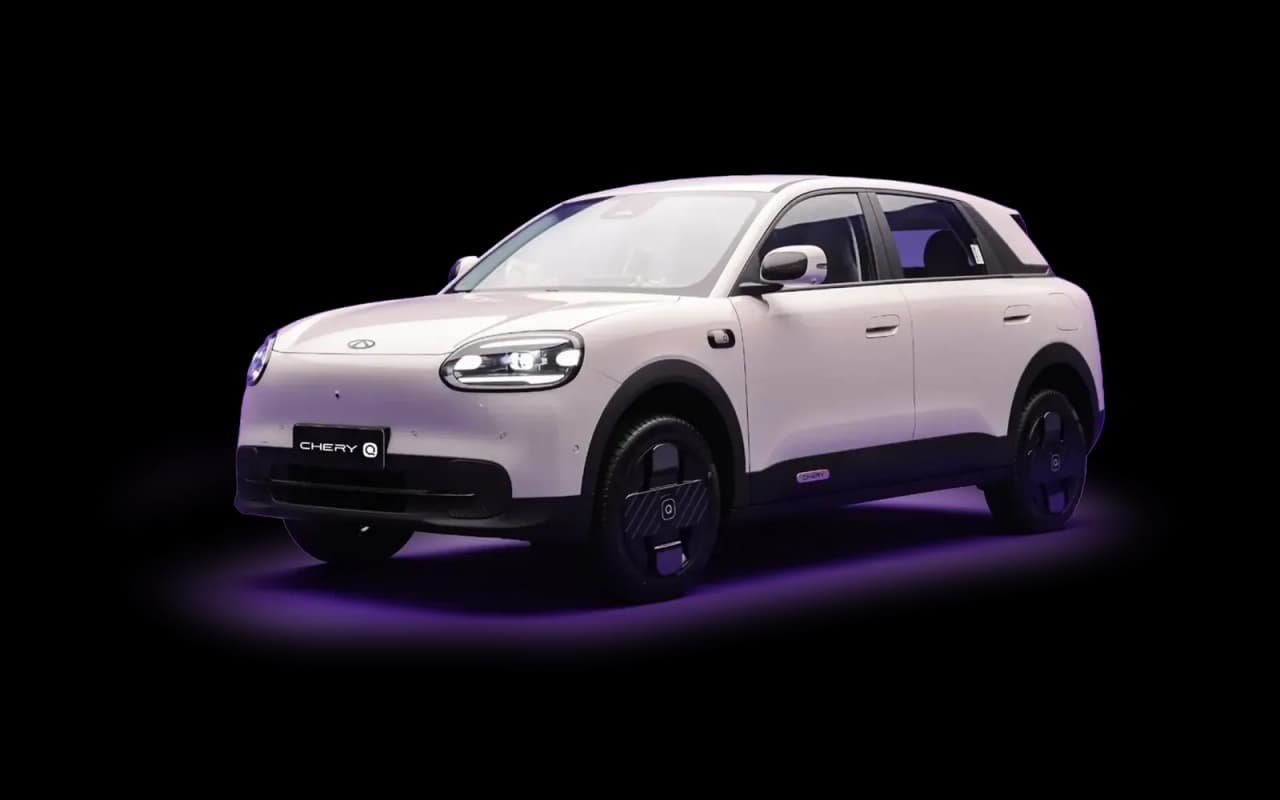
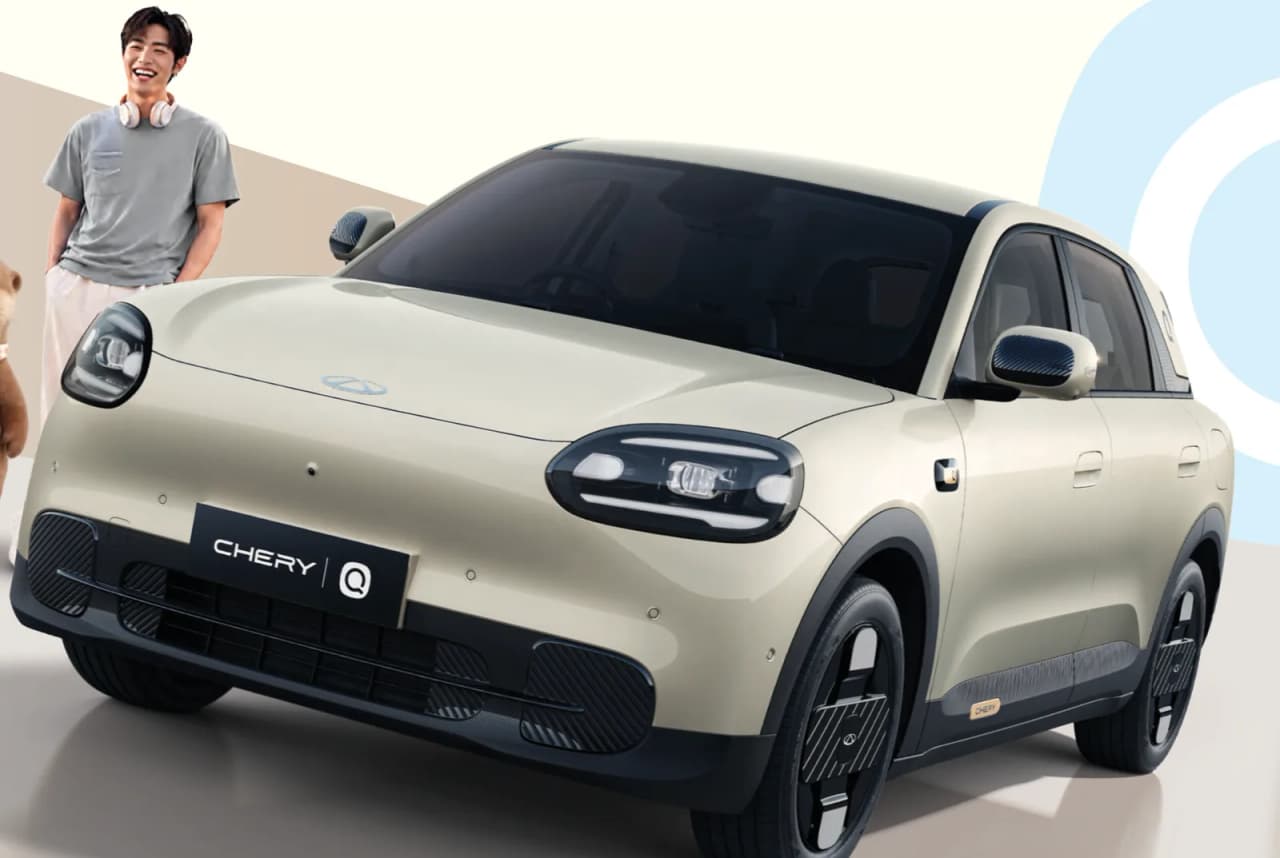
The first thing anyone notices about the Q EV is how deliberately cute it looks. The styling leans heavily on Mini Cooper-style cues — a short, rounded body, a friendly face, and proportions that make it look almost toy-like from a distance. Round LED headlights give it an expressive, wide-eyed front end, while the rear taillights borrow a more premium, BMW-like horizontal LED signature that looks genuinely upscale for a car in this price bracket.
Build quality, from what showroom units in Nepal reveal, feels solid for the segment, with panel gaps and fit that don't betray the value positioning. One of the most talked-about design touches isn't even on the car itself — it's the key fob, a circular remote styled like a cosmetics compact, complete with a flip-open lid. It's a small, slightly indulgent detail, but it signals that Chery wanted this car to feel like a lifestyle object rather than just transport.
The Colours Nepali Buyers Will Actually See
Showroom demonstration units have been seen in a light cream, almost off-white shade that suits the car's soft, rounded design language particularly well — it plays up the cute, approachable character rather than fighting it. A striking purple exterior option has also surfaced in promotional material, giving buyers who want to stand out at a stoplight a genuinely bold alternative to the usual white, silver and grey that dominate Nepal's EV parking lots. Exact colour availability by variant hasn't been officially detailed for the Nepali market yet, so buyers should confirm specific shade options with SPG Automobiles before booking.
A Cabin Built Around One Big Screen And Several Small Surprises
Step inside and the dashboard is dominated by a 15.6-inch central touchscreen — a genuinely large display for a car this size, and one that Chery has made customisable with different wallpaper themes, giving the cabin a personal touch that's unusual at this price point. Behind the wheel sits a smaller, functional digital instrument cluster that keeps the essentials — speed, range, battery status — clearly visible without competing for attention with the main screen.
One feature that stands out as genuinely unusual is Q Talk, a system that lets occupants inside the car broadcast their voice through an external speaker — handy for a drive-through order, a quick word to a parking attendant, or calling out to someone without rolling the window down. It's a gimmick, but a memorable one, and exactly the kind of feature that makes the Q EV feel more thought-through than its price suggests.
Sensibly, Chery hasn't buried climate control entirely inside the touchscreen — physical buttons for the air conditioning sit just below the vents, easy to reach without glancing away from the road. One caveat worth flagging for early buyers: on units seen prior to launch, Apple CarPlay and Android Auto weren't yet functional, so anyone relying heavily on phone mirroring should verify this is sorted before taking delivery.
What The 90 kW Motor Actually Feels Like To Drive
Both variants — Comfort and Premium — share the same 90 kW electric motor driving the rear wheels, a layout that's still relatively uncommon in this segment where front-wheel-drive dominates. Acceleration off the line is smooth and immediate, in the way electric motors typically deliver, though this isn't a car built for quick overtakes or highway sprints. Top speed sits at 139 km/h, a figure that tells you everything about the Q EV's intended habitat: city streets and suburban roads, not open highways.
This isn't a shortcoming so much as an honest reflection of what the car is engineered to do. Buyers expecting hot-hatch urgency will be disappointed; buyers looking for confident, linear power delivery for commuting will find the motor entirely adequate.
Ride Comfort That Trades Softness For Predictability
The Q EV runs a MacPherson strut front and multilink rear suspension setup — a slightly more sophisticated rear arrangement than some segment rivals, which often make do with a simple torsion beam. Despite that, ride quality leans firm rather than plush. Over broken tarmac and speed bumps, the suspension transmits more of the impact into the cabin than ideal, and this has been a consistent point of criticism across the board.
That said, the flip side of the firmer setup is composed, predictable handling at urban speeds — the kind of stability that makes threading through Kathmandu's traffic or navigating tight parking lots feel manageable rather than nervy. On the highway, buyers should expect noticeable wind noise creeping in past 100 km/h, a reminder that this car's comfort priorities are calibrated for the city, not for long, high-speed stretches.
Space That Punches Well Above Its Footprint
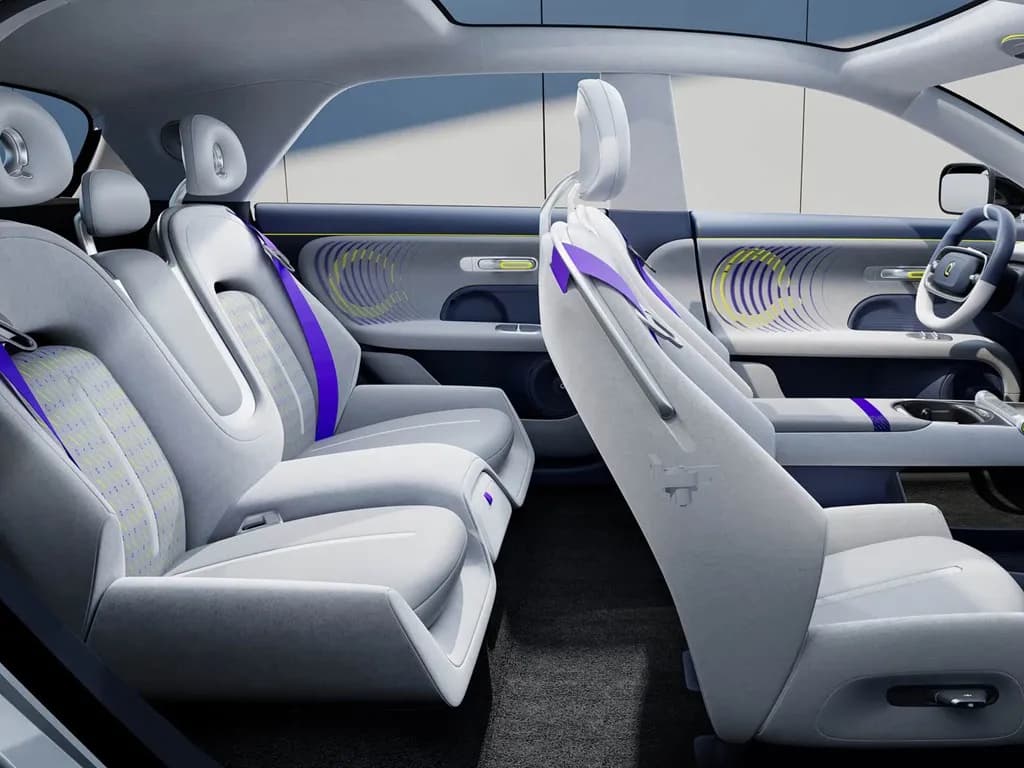
For a car just 4,195 mm long, the Q EV's interior packaging is genuinely impressive. The 2,700 mm wheelbase — long relative to the car's overall length — translates directly into exceptional rear legroom, easily the segment's biggest surprise for anyone expecting a cramped rear bench. The seating position up front is comfortable, with good outward visibility that makes it easy to place the car in tight Kathmandu streets.
A particularly clever touch is the under-seat storage compartment at the rear, purpose-built for stashing shoes — a small detail, but one that shows real thought went into how people actually use small cars day to day.
Braking Feel And The Safety Net Around It
Regeneration is one of the Q EV's genuine highlights: the braking calibration is smooth and well-judged, avoiding the jerky, nausea-inducing lurch that plagues cheaper EVs when lifting off the accelerator. For passengers prone to motion sickness in stop-start traffic, this matters more than it sounds.
On the safety front, Chery has loaded the Q EV with more than 20 ADAS features and a 540-degree camera system, giving drivers a genuinely comprehensive view around the car for tight parking manoeuvres — a useful asset in Nepal's often chaotic street parking scenarios.
Everyday Practicality: The Frunk Does Double Duty
Beyond the cabin, the Q EV's practicality case rests heavily on its frunk — a genuinely usable front storage compartment that's large enough to double as an impromptu cooler for drinks on a day trip. Paired with a hands-free automatic tailgate that opens without needing a free hand, loading groceries or luggage becomes noticeably easier than in most rivals at this price.
Charging Speed And What Real-World Range Might Look Like
The Q EV's 41.2 kWh LFP battery is rated for up to 400 km under the NEDC cycle, with 85 kW DC fast charging capable of taking the battery from 30 to 80 percent in around 16 minutes — a genuinely quick top-up for errands between charging sessions. It's worth noting for Nepali buyers that NEDC figures tend to run optimistic compared to real-world city and highway use, so day-to-day range should be budgeted with a margin below the claimed number, particularly with hill climbs and air conditioning use factored in. The V2L capability is a nice bonus, letting owners power external devices or appliances directly from the car's battery — handy during load-shedding or for outdoor use.
Picking Between Comfort And Premium
With both variants sharing the same 90 kW motor and drivetrain, the roughly Rs 1.5 lakh gap between the Comfort at Rs 34,49,000 and the Premium at Rs 35,99,000 comes down to equipment and trim rather than performance. For most buyers prioritising value, the Comfort covers the essentials — the big touchscreen, the frunk, the ADAS suite — while the Premium is the one to choose if you want the fuller feature set and don't mind paying for it. Either way, this remains a car bought for its packaging and character rather than raw numbers.
The Citroen eC3 Offers More Space For Less Polish
The Citroen eC3 competes directly on price and EV positioning but takes a more conventional, less design-led approach to its cabin and features. Where the Q EV leans on its frunk, Q Talk system and premium-feeling touchscreen to justify its price, the eC3 leans on straightforward practicality and a simpler ownership proposition. Buyers who want personality and tech-forward gadgetry will gravitate toward the Chery; those who want no-fuss simplicity may prefer the Citroen.
The MG Comet EV Is Smaller And More City-Focused Still
The MG Comet EV occupies an even more compact, budget-friendly niche, and comparing it to the Q EV highlights just how much more substantial Chery's offering feels in person. The Comet EV is built almost exclusively for last-mile urban use, with a smaller footprint and simpler equipment list, while the Q EV's larger dimensions, frunk, and longer NEDC-rated range make it feel like a more complete, usable car for buyers who want one vehicle to cover most of their driving rather than a pure city runabout.
Who Should Actually Buy This Car
The Chery Q EV makes the most sense for urban commuters who want a stylish, feature-rich electric car for daily use around Kathmandu, Pokhara, or other city environments, without needing to venture far beyond municipal limits regularly. Its clever storage solutions, quick charging, and genuinely characterful design make it an easy car to enjoy living with day to day.
It makes far less sense for buyers whose driving regularly involves highway stretches or intercity trips, where the firm ride, wind noise, and NEDC-rated range become real limitations rather than minor quirks. For that specific city-first buyer, though, the Q EV delivers a genuinely likeable package that few rivals in Nepal currently match on charm and thoughtful detail.
Explore full specifications, variants & ownership context
Know the product
Key specifications, features & ownership context
Choose a variant to see its recorded specifications and features. Equipment and prices can change across trims.
Latest catalog and directory records supplement the original analysis. Figures may have changed since publication; individual specification and price-check dates appear below.
Rs 35.99 lakh ex-showroom · source-check date not recorded
Battery & charging
| Specification / feature | Premium |
|---|---|
| Battery | 41.2 kWhResearched · confirm · 13 Sept 2026 |
| Claimed range | 400 km (NEDC)Researched · confirm · 21 Sept 2026 |
Safety & driver assistance
| Specification / feature | Premium |
|---|---|
| Airbags | 6 airbagsResearched · confirm · 13 Sept 2026 |
Dimensions & weight
| Specification / feature | Premium |
|---|---|
| Ground clearance | 175 mmResearched · confirm · 29 Aug 2026 |
Claimed range uses the stated test cycle. Different cycles are not a like-for-like range comparison; actual range depends on roads, load, speed and weather.
Showroom & service support
Distributor: SPG Automobiles Pvt. Ltd. (under Sharda Group)
13 listed brand showrooms · 1 listed brand service locations
Listed cities include Bharatpur, Biratnagar, Butwal, Kathmandu, Lalitpur, Pokhara.
Brand-wide directory coverage. Confirm that your nearest workshop supports this exact model, powertrain and warranty work; ask about parts availability and booking time.
Market buzz & buyer priorities
Compiled discussion, including buyer reactions and ownership reports; this is not a verified owner survey or a reliability score. Research dated 13 Oct 2026.
What people like
- Spacious cabin design relative to its compact footprint
- Fast DC charging capability (30-80% in ~16 minutes)
- Strong value proposition with high-tech features like 540-degree cameras
More feedback
- Brisk and smooth power delivery from the rear-wheel-drive motor
Concerns to investigate
- Interior refinement is uncertain until actual release.
- Ground clearance of 175 mm is considered moderate for rough Nepali terrain
- Real-world driving range is noticeably lower than the optimistic NEDC cycle
More feedback
- Base Comfort variant lacks the advanced driver-assist features found in the Premium trim
- Some Nepali viewers found the cabin plastics less premium than expected.
- Buyers remain concerned about after-sales coverage and service access outside Kathmandu Valley.
- Resale value is uncertain because the model and Chery Q ownership base are still new in Nepal.
What buyers ask for
- Real-world range vs. claimed NEDC figures
Nepal ownership context
- Officially distributed by Pioneer Moto Corp with service networks in major cities like Kathmandu, Pokhara, and Chitwan
- Positioned as a city-focused urban crossover rather than an off-roader
- Resale value remains a point of discussion as it is a relatively new entrant in the local EV market
More feedback
- Service availability outside the Valley is a recurring buying concern for a newer EV brand, especially for buyers planning frequent highway or Terai travel.
- Nepali buyers are evaluating the vehicle for city use while asking whether charging access, range and support will remain practical on longer trips.
Use these facts alongside the article’s full analysis. Check the final quotation, warranty terms and exact equipment before booking.
Evidence & next steps
Check the details before you buy
Use this guide to build a shortlist. Ask for a written quotation for your chosen variant, including registration, taxes, insurance, finance charges and any charger installation. Confirm the nearest authorised workshop supports that model.
Price sources and dates
These are the recorded distributor-source checks for the selected overview trims. They are separate from the article update and catalog read dates; they do not mean every trim was rechecked today. Confirm the final price with the distributor.
Overview photos come from the corresponding model records; additional article photos carry their own credits. Running costs depend on usage, energy prices, maintenance, insurance and resale value.