Start with the numbers
Compare at a glance
Top available variants, with prices in Nepalese rupees. Expand details to choose another variant.
| At a glance | Nissan Tekton | Honda Amaze |
|---|---|---|
| Ex-showroom price | Rs 53.99 lakh | Rs 57.75 lakh |
| Fuel | Petrol | Petrol |
| Selected variant | Base | VX CVT |
Ex-showroom prices exclude registration, road tax and insurance. Specifications can vary by trim. See individual source-check dates ↓
Where each sits in the Nepali market
The Tekton and Amaze are aimed at different instincts, even if some buyers will cross-shop them on budget. The Nissan Tekton Visia T160 MT starts at Rs 53.99 lakh, while the Honda Amaze runs from Rs 46.79 lakh for the S MT to Rs 57.75 lakh for the VX CVT. On headline price alone, the Amaze opens the door wider; on size and road presence, the Tekton feels like the bigger machine for the money.
The distribution gap is even more important in Nepal than in many other markets. Nissan’s presence here is much smaller, with 34 showrooms and 25 service centers, while Honda’s network is vastly broader at 165 showrooms and 182 service centers. That difference affects everything from sales confidence to routine maintenance convenience, and for many Nepali buyers it will matter as much as the spec sheet.
My reading of the market is simple: the Tekton is the more distinctive, emotionally persuasive option, especially for buyers who want an SUV-like stance and stronger standard kit. The Amaze is the safer ownership bet, and in Nepal that often means the more practical long-term purchase.
Looks and design differences
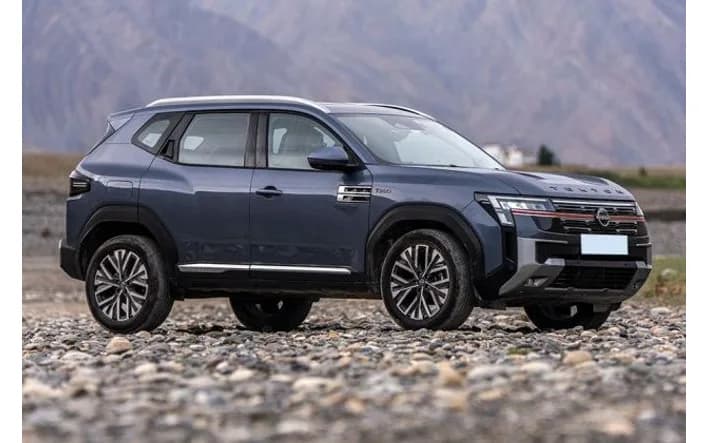
These two cars do not look like rivals from the same design philosophy. The Tekton is the more assertive, taller, and more rugged-looking vehicle, with Matrix Vision LED headlamps, signature C-shaped LED DRLs, C-shaped tail lamps, 17-inch steel wheels on the Visia, and a shape that reads more like a compact SUV than a conventional sedan.
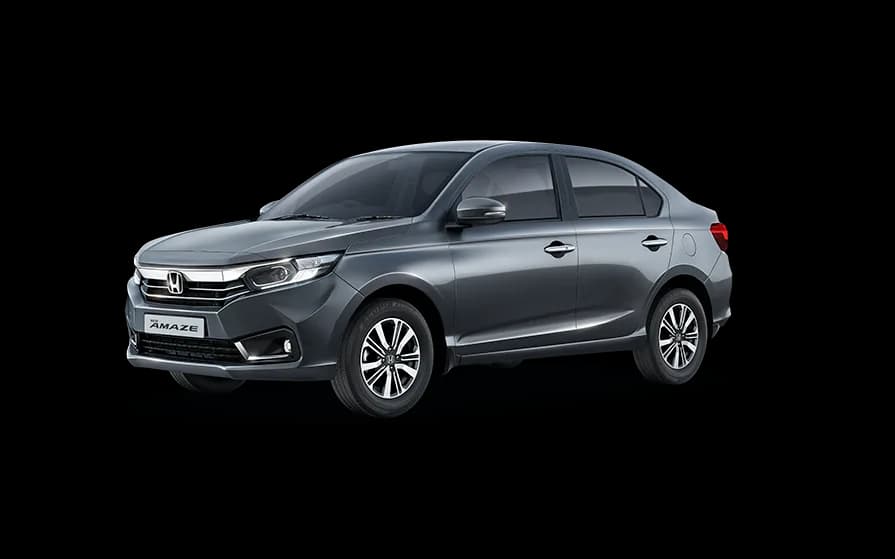
Its proportions back that up. The Tekton measures 4349mm long, 1815mm wide and 1674mm high, with 212mm ground clearance and a 2657mm wheelbase. That is a very different visual and physical proposition from the Amaze, which is a compact sedan at 3995mm long, 1695mm wide and 1498-1501mm high with 171mm ground clearance and a 2470mm wheelbase.
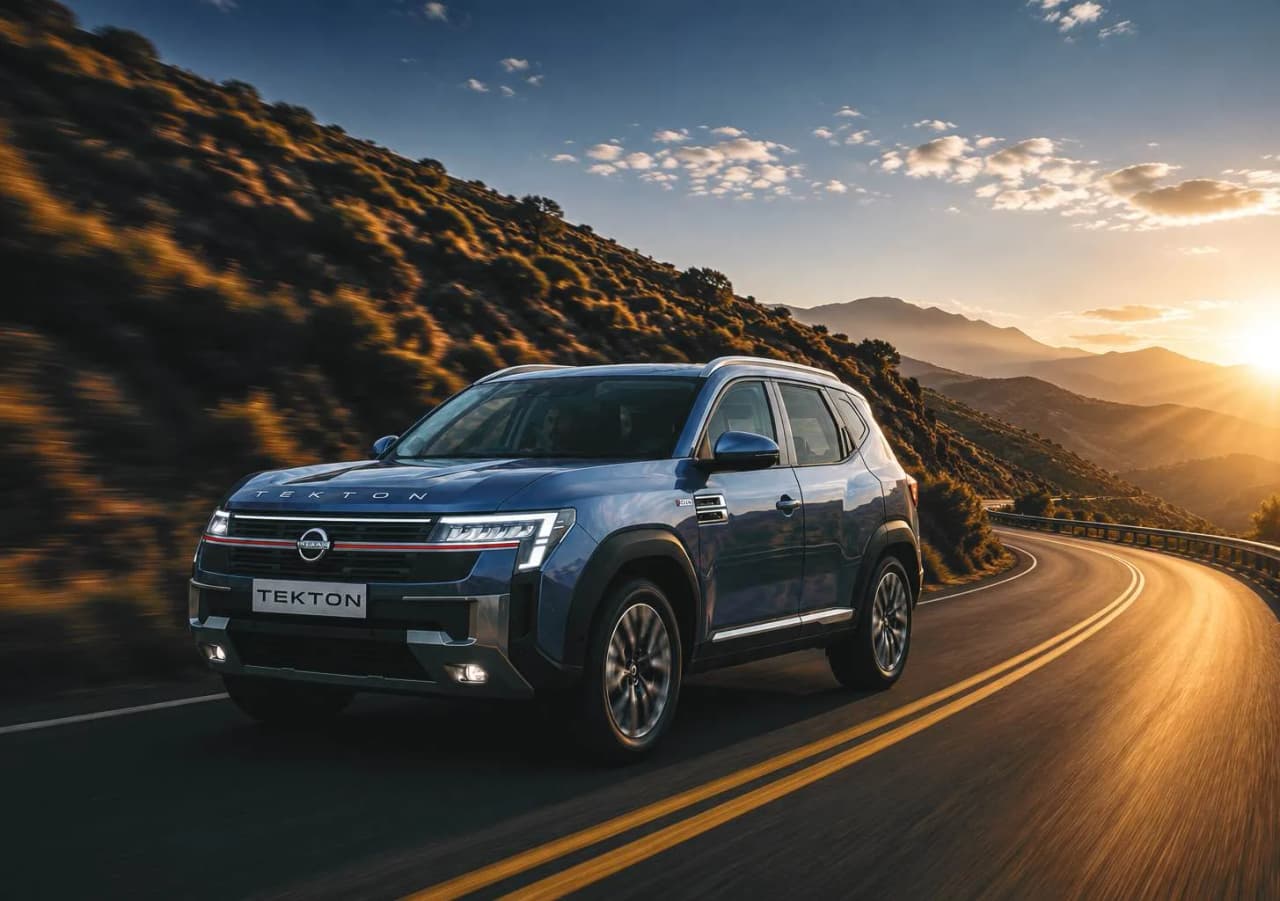
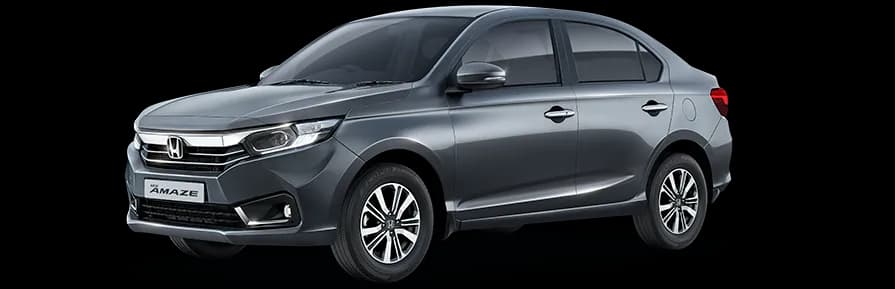
The Amaze is neater and easier to place in traffic, but it is also visually more conventional. If you want your car to look like a raised, modern, more expensive-feeling object on Nepali roads, the Tekton wins this section clearly. If you prefer a tidy sedan that does not shout, the Amaze is calmer and more traditional.
Features and equipment differences
This is where the Tekton’s entry trim punches hard. Even the Visia T160 MT gets 6 airbags, automatic headlamps, TPMS, ESC, traction control, cornering stability control, hill start assist, rear parking sensors, framed? no, frameless wipers, LED lighting elements, a 7-inch Advanced Drive-Assist display, rear AC vents, one-touch power windows with anti-pinch, and a height-adjustable driver seat.
That is a serious amount of standard safety and convenience for the money. The Tekton also brings a bigger-feeling cabin treatment with soft-touch trim, a sliding armrest, and a large boot rated at 700-1789 litres up to roof or 518 litres up to the parcel shelf.
The Amaze data set gives less trim-specific detail, but the positioning is still clear. The S MT, S CVT, VX MT, and VX CVT cover a broad price ladder, with the VX CVT sitting as the top automatic. What matters most here is that the Amaze’s strength is not aggressive standard equipment on the base trim; its strength is accessible pricing and broad availability across the range.
Judged strictly by the verified equipment we have, the Tekton looks better-equipped from the start. The Amaze may be the easier car to buy, but the Nissan feels more generous in safety and visual kit at base level.
Engine, drivetrain and performance differences
Mechanically, this is perhaps the cleanest split in the comparison. The Tekton Visia T160 MT uses a 999cc, 3-cylinder, turbo petrol, E20-compatible engine producing 100PS at 5000rpm and 166Nm between 2000-3750rpm, paired with a 6-speed manual. That combination is the classic low-displacement turbo formula: stronger mid-range pull than a naturally aspirated engine, better overtaking flexibility, and a more modern performance feel.
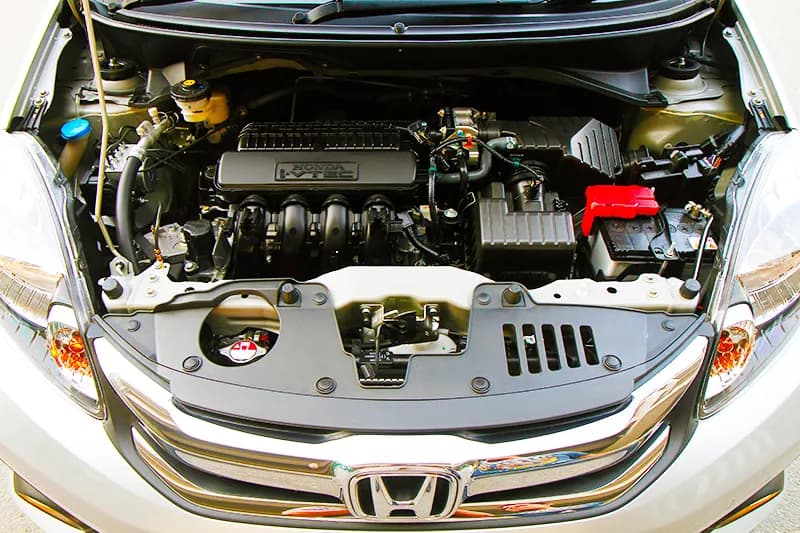
The Amaze uses a 1,199cc, 4-cylinder i-VTEC petrol engine across its variants. The data provided does not list peak power and torque figures, but the engine architecture itself tells part of the story: the Honda will likely feel smoother and simpler in everyday use, while the Nissan should feel punchier when the turbo comes on song.
The transmission choice also shapes the character. The Tekton entry trim is manual only in the data provided, while the Amaze gives buyers a choice between manual and CVT from the S trim upward. That means the Honda is the easier recommendation for buyers who specifically want an automatic and want it from an accessible price band.
For drivers who value relaxed urban convenience, the Amaze’s CVT variants are a major advantage. For buyers who care more about torque-rich, more SUV-like response and do not mind shifting themselves, the Tekton has the stronger mechanical personality.
Ride, handling and comfort
On paper, the Tekton is built to suit Nepal better. The 212mm ground clearance is a major advantage over the Amaze’s 171mm, and the Tekton’s longer wheelbase and larger body should help it feel more planted on rough roads and more stable on broken surfaces. Its suspension layout is also more SUV-like in intention, with MacPherson strut front and twist-beam rear setup.
The Amaze will likely feel lighter and easier in tight urban conditions because it is smaller, narrower, and lower. That compactness can make it friendlier in crowded Kathmandu traffic and easier to park, especially for buyers moving up from smaller hatchbacks.
Comfort-wise, the Tekton again has the more explicitly Nepali-road-friendly spec. A rear AC vent, driver seat height adjuster, tilt and telescopic steering, and a larger body should help on longer trips and with family use. The Amaze’s cabin comfort is not fully detailed in the supplied data, so I will not overstate it; what can be said confidently is that its size and sedan format should make it an easy daily driver, though not as commanding over rough sections as the Tekton.
My editorial view: if you frequently deal with speed breakers, broken shoulders, and mixed-road travel, the Tekton’s body style and ground clearance give it the clearer advantage. If your use is mostly city and highway with easier parking needs, the Amaze’s compact sedan packaging remains attractive.
Practicality and running costs
Practicality is a mixed bag, because both cars solve different problems. The Tekton’s biggest practical strengths are its high ground clearance, large boot, and more upright body. For families carrying luggage, shopping, or mixed cargo, the Tekton simply offers more physical versatility.
The Amaze counters with easier urban ownership. Its 35-litre fuel tank is smaller than the Tekton’s 50 litres, which suggests less fuel range flexibility, but its lighter, smaller body and simpler naturally aspirated layout should generally make it the less intimidating day-to-day vehicle for many buyers. The Toyota-like logic of small sedan ownership is not absent here: it is easier to live with, easier to squeeze into tight spaces, and easier to explain to buyers who just want a car that behaves predictably.
Running costs are where Honda usually builds trust in Nepal, and that is reinforced here by the network scale. With far more showrooms and service centers, the Amaze should be easier to maintain, easier to source parts for, and less stressful if you travel outside the main urban corridors. Nissan’s smaller footprint does not make the Tekton a bad ownership proposition, but it does make it a more conscious choice.
Price and variants side by side
| Model | Variant | Transmission | Ex-showroom price | |---|---|---:|---:| | Nissan Tekton | Visia T160 MT | 6-speed manual | Rs 53.99 lakh | | Honda Amaze | S MT | Manual | Rs 46.79 lakh | | Honda Amaze | S CVT | CVT automatic | Rs 51.54 lakh | | Honda Amaze | VX MT | Manual | Rs 53.22 lakh | | Honda Amaze | VX CVT | CVT automatic | Rs 57.75 lakh |
The most direct price comparison is revealing. The Tekton sits above the Amaze S MT and S CVT, just above the Amaze VX MT, and below the top-spec VX CVT. That places it in a very awkward but interesting middle ground: it is not the cheapest choice, but it is not priced as a luxury stretch either.
The Tekton’s current launch offer is also meaningful: free insurance, road tax, namasari for one year, three years free servicing, and a Bosch pressure washer. The Amaze has no official cash discount disclosed in the data provided. That does not change the sticker price, but it does soften the Tekton’s real-world ownership entry cost.
Which one wins for which buyer
- Choose the Nissan Tekton Visia T160 MT if you want the stronger SUV stance, much higher ground clearance, and better standard safety kit.
- Choose the Nissan Tekton if your roads are rough and you want a car that feels built for abuse.
- Choose the Honda Amaze S MT if your main priority is lowest entry price and straightforward sedan ownership.
- Choose the Honda Amaze S CVT if you want an automatic without climbing to the top of the range.
- Choose the Honda Amaze VX CVT if you want the most complete Amaze and value the broader Honda support network.
My overall verdict is that the Tekton is the more desirable car, but the Amaze is the more sensible purchase for most Nepali buyers. The Nissan feels tougher, more distinctive, and better suited to imperfect roads. The Honda is easier to buy, easier to service, and easier to own across Nepal’s wider geography. If your heart wants the SUV-like presence and your routes justify it, the Tekton has the stronger appeal. If your head is counting years of use, service access, and resale comfort, the Amaze remains the safer, more broadly rational choice.
Explore full specifications, variants & ownership context
Compare the exact variants
Specifications, features & ownership context
Choose a variant for each vehicle. The facts below follow that exact trim; the article explains the trade-offs.
Latest catalog and directory records supplement the original analysis. Figures may have changed since publication; individual specification and price-check dates appear below.
Nissan Tekton
Rs 53.99 lakh ex-showroom · source checked 12 Oct 2026
Honda Amaze
Rs 57.75 lakh ex-showroom · source checked 14 Oct 2026
Engine & performance
| Specification / feature | Nissan Tekton | Honda Amaze |
|---|---|---|
| Engine displacement | 999 ccVerified specification · 23 Aug 2026 | 1199 ccResearched · confirm · 21 Sept 2026 |
Safety & driver assistance
| Specification / feature | Nissan Tekton | Honda Amaze |
|---|---|---|
| Airbags | 6 airbagsVerified specification · 23 Aug 2026 | — |
Dimensions & weight
| Specification / feature | Nissan Tekton | Honda Amaze |
|---|---|---|
| Ground clearance | 212 mmVerified specification · 23 Aug 2026 | 171 mmResearched · confirm · 13 Jul 2026 |
| Boot space | 518 LResearched · confirm · 30 Sept 2026 | 420 LResearched · confirm · 10 Sept 2026 |
Nissan Tekton
Showroom & service support
Distributor: Pioneer Moto Corp Pvt. Ltd.
34 listed brand showrooms · 24 listed brand service locations
Listed cities include Banepa, Bhairahawa, Bhaktapur, Bharatpur, Biratnagar, Birgunj and 10 more.
Brand-wide directory coverage. Confirm that your nearest workshop supports this exact model, powertrain and warranty work; ask about parts availability and booking time.
Market buzz & buyer priorities
Compiled discussion, including buyer reactions and ownership reports; this is not a verified owner survey or a reliability score. Research dated 13 Oct 2026.
What people like
- High ground clearance of 212 mm suitable for Nepali roads
- Strong performance from the 1.3L turbo engine option
Concerns to investigate
- Base variants lack premium features like touchscreens and keyless entry
Nepal ownership context
- Marketed as a premium alternative to the Magnite for families needing more space and power.
- High ground clearance is a major selling point for navigating diverse Nepali terrain.
- Service network and long-term resale value are key considerations for buyers as it is a recent launch.
More feedback
- The 1.3-litre version is available with a six-speed wet DCT automatic, while the 1.0-litre version uses a six-speed manual gearbox.
- Its on-road price will be higher than the ex-showroom price because registration, insurance and other local charges vary by location and buyer.
Honda Amaze
Showroom & service support
Distributor: Syakar Trading Company Pvt. Ltd.
168 listed brand showrooms · 162 listed brand service locations
Listed cities include Attariya, Baglung, Banepa, Barahathawa, Bardaghat, Bardibas and 82 more.
Brand-wide directory coverage. Confirm that your nearest workshop supports this exact model, powertrain and warranty work; ask about parts availability and booking time.
Market buzz & buyer priorities
Compiled discussion, including buyer reactions and ownership reports; this is not a verified owner survey or a reliability score. Research dated 5 Sept 2026.
What people like
- good fuel efficiency in highway conditions
Concerns to investigate
- ground clearance low when fully loaded
What buyers ask for
- ground clearance (roads & speed breakers)
- fuel efficiency esp. in city vs highway
- price vs value in feature-variant tradeoff
Nepal ownership context
- service workshops (Syakar Trading Honda) seen as reliable
- fuel efficiency in Kathmandu ~12-14 km/l; highway 18-20 km/l
- resale value considered good among Honda brand sedans
Use these facts alongside the article’s full analysis. Check the final quotation, warranty terms and exact equipment before booking.
Evidence & next steps
Check the details before you buy
Use this guide to build a shortlist. Ask for a written quotation for your chosen variant, including registration, taxes, insurance and finance charges. Confirm the nearest authorised workshop supports that model.
Price sources and dates
These are the recorded distributor-source checks for the selected overview trims. They are separate from the article update and catalog read dates; they do not mean every trim was rechecked today. Confirm the final price with the distributor.
Overview photos come from the corresponding model records; additional article photos carry their own credits. Running costs depend on usage, energy prices, maintenance, insurance and resale value.