
Start with the numbers
The model, at a glance
Available variants, with prices in Nepalese rupees.
| Vehicle | Ex-showroom price | Fuel | Selected variant |
|---|---|---|---|
| 01Bajaj Pulsar 220F | Rs 4.65 lakh | Petrol | (Single Channel ABS, FI BS6) |
Ex-showroom prices exclude registration, road tax and insurance. Specifications can vary by trim. See individual source-check dates ↓
Where This Bike Sits In Nepal's Crowded 200cc-Plus Shelf
The Pulsar 220F has been sold in Nepal for close to two decades in one form or another, and HH Bajaj brings the fuel-injected, BS6-spec version to market in 2026 at Rs 4.55 lakh ex-showroom for the sole Single Channel ABS, FI BS6 variant. That is a single-variant motorcycle: no lower-spec trim to trade down to, no higher trim with extra kit to chase. Everyone who buys this bike gets the 220cc oil-cooled motor, the front-only ABS, and the same 15-litre tank, whether they ride it every day to Koteshwor or take it touring toward Pokhara on weekends.
At this price point in Nepal, the 220F sits close to bigger-displacement cruisers and naked streetfighters, and that overlap is exactly what buyers keep raising. It's still positioned as a semi-faired sport-commuter first, and a highway tool second. For riders who want that specific mix, and who value the brand's long service history here, it remains a straightforward, known quantity.
A Familiar Silhouette With Tighter Panels And Little Else New
Park a current 220F next to one from five years ago and the shape barely changes. The semi-fairing, the tank profile, the rear cowl, all of it stays recognisable at a glance. What has moved on are the graphics on the fairing, tank and cowl, and a noticeably tighter fit and finish: panel gaps feel narrower, and the whole motorcycle carries a more solid, less rattly impression than the models that came before it.
The rear grab rails get a real upgrade too, built from a sturdier, better-finished material that should hold up to years of pillion use and the odd rough parking manoeuvre. It's a small detail, but it's the kind of thing that tells you where the incremental spend went. What buyers won't get is a redesigned face or a fresh silhouette to justify the current price against a market that has moved toward more contemporary styling elsewhere. That's the trade-off Bajaj has made here: keep the equity in an iconic shape, spend the update budget on finish quality instead of visual reinvention.
Two Colour Options, Both Playing It Safe
The 220F for 2026 comes in Black with red graphics and Black with blue graphics. Both are variations on the same black base rather than genuinely distinct paint schemes, which keeps things simple for buyers but won't excite anyone hoping for a fresh look to go with the new engine internals. It's a conservative colour strategy for a motorcycle whose core appeal has always leaned on performance and nostalgia rather than paint.
The Instrument Cluster Is The One Piece Of Kit Buyers Keep Flagging
Equipment-wise, the 220F carries a projector headlamp rated at 55/55W, LED taillight, LED indicators, and backlit switchgear on the handlebar that lifts night-time usability more than its price tag suggests it should. The bike also gets a Bluetooth connection, a companion mobile app, turn-by-turn navigation, distance-to-empty readout and real-time fuel economy tracking, according to Bajaj's own spec sheet — a reasonably rich features list for a 220cc commuter.
Where the actual instrument cluster on the road disappoints riders is its display format: the semi-digital console layout has stayed unchanged for successive updates, and it doesn't visually match the modern, fully digital dashboards now common on rivals in this price band. The one genuine addition is a dedicated engine check warning light tied to the new fuel-injection system, useful for spotting FI faults early, but not the kind of upgrade that changes how the bike feels to ride day to day. For a motorcycle priced where it is in 2026, buyers reasonably expect the cluster itself to look and feel newer than it does.
The Engine Still Has The Punch Pulsar Riders Expect
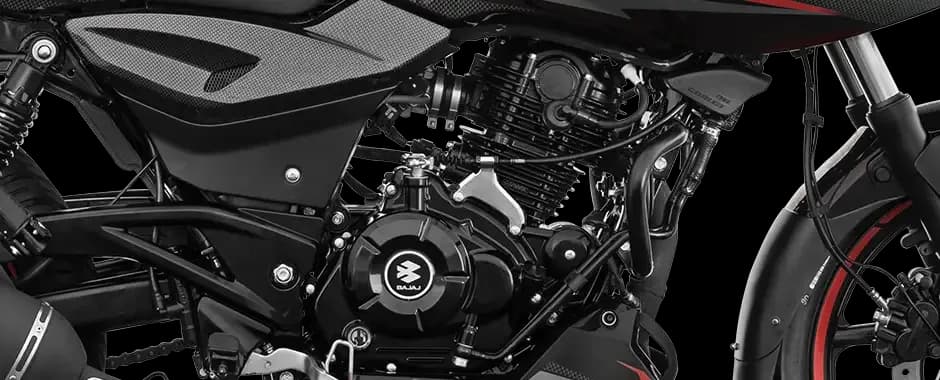
The 220cc oil-cooled engine produces 15.37 kW (20.9 PS) at 8,500 rpm and 18.55 Nm of torque at 7,000 rpm, sent through electronic fuel injection rather than a carburettor. That switch to FI is the real mechanical news on this generation, and it shows up most clearly in throttle response: the pull off idle is crisp and immediate, retaining the punchy, eager character this engine has always been known for.
Mid-range remains the motor's strongest suit, with enough torque on tap to make overtakes on the Prithvi Highway or a two-lane stretch out of Butwal feel unhurried rather than committed. The exhaust note stays quiet and civil at low revs, which matters for a bike that will spend plenty of its life idling through Kathmandu traffic, but opens into a genuinely sporty growl past 8,000 rpm when the rider wants it. That dual character, refined commuter at low revs, sporty machine higher up, is the 220F's clearest carry-over strength from earlier generations, now delivered more smoothly thanks to fuel injection cleaning up the fuelling curve.
Ride Quality Trades Plushness For Highway Composure

Suspension duties go to 37mm telescopic forks up front and twin hydraulic shocks at the rear, a conventional setup that prioritises stability over outright plushness. Over Kathmandu Valley's patchwork tarmac the setup handles broken surfaces without drama, and on the open highway the bike settles into a genuinely stable, planted feel at speed that riders consistently rate as one of its strongest traits.
Cornering confidence follows from the same setup: a supportive chassis paired with the 120/80-R17 rear tyre gives good dry grip and predictable behaviour leaning into bends, whether that's a mountain switchback or a roundabout in Butwal. At 160 kg kerb weight and a 1,350 mm wheelbase, the 220F doesn't feel featherlight, but that mass works in its favour on the highway, where it resists getting knocked around by crosswinds or passing trucks.
Ergonomics Favour Long Rides Over Short Hops

The split-seat design gets genuinely improved cushioning over earlier versions, and it shows on longer stints in the saddle. Seat height sits at 805 mm, manageable for most Nepali riders without straining at stops, and the riding posture leans mildly forward without loading up the wrists the way a fully committed sportbike crouch would.
Pillion accommodation is reasonably generous too, helped by those sturdier grab rails mentioned earlier. For a bike that will double as both a daily commute machine and an occasional two-up tourer to Nagarkot or Dhulikhel, that combination of seat comfort and manageable ergonomics matters more than outright sportiness.
Braking Is Confident, But Only The Front Wheel Gets ABS
Stopping power comes from a 280 mm front disc and 230 mm rear disc, backed by single-channel ABS on the front wheel only. In practice that setup pulls the bike down from higher speeds with strong, stable bite and no front lockup under hard braking, which is the scenario ABS is there to prevent in the first place.
What it doesn't offer is rear-wheel ABS coverage, something increasingly common on rivals at this price and one of the more legitimate asks from buyers shopping this segment in 2026. For most everyday riding and even spirited highway use, front-only ABS on a 160 kg motorcycle with this power figure is adequate. It's simply not the most complete safety package money can buy in this bracket anymore.
A 15-Litre Tank Built For Distance Riding
Bajaj's own figures put the claimed mileage around 40 km/l, translating to an approximate 600 km range on a full 15-litre tank. That's a genuinely useful number for anyone using this bike for both city commuting and periodic long hauls, and it means fuel stops on a trip toward Pokhara or Chitwan are infrequent rather than a constant calculation.
Fuel injection is the mechanical reason behind that efficiency figure, replacing the carburettor and cleaning up combustion at a range of throttle openings. Ground clearance of 165 mm also helps on rougher rural stretches where the tank's range advantage actually gets used, rather than being confined to smooth city riding.
One Variant, One Price, No Trim Ladder To Climb
There's no variant complexity to navigate here. The Single Channel ABS, FI BS6 trim at Rs 4.55 lakh ex-showroom is the only 220F on offer in Nepal, so the buying decision reduces to whether this specific package, at this specific price, makes sense against what else Rs 4.55 lakh can buy. That price is distributor-verified through HH Bajaj, and it applies uniformly; there's no lower-spec version to soften the entry cost.
The honest market feedback circulating around this exact price point is worth repeating plainly: some riders and dealers describe the ask as high for what many still consider an older platform underneath the fuel-injection update. That's not a knock on how the bike rides. It's a reflection of where 220cc pricing has drifted relative to what buyers can get for similar or slightly higher money elsewhere in Nepal's current lineup.
The Royal Enfield Meteor 350 Pulls Buyers With Comfort And Character

The Royal Enfield Meteor 350 competes for a similar type of buyer: someone wanting a comfortable, characterful motorcycle for commuting and weekend touring rather than outright track performance. Where the Meteor 350 pulls ahead is low-speed comfort and long-distance seating position, areas where its cruiser-influenced ergonomics suit relaxed highway riding particularly well.
The Pulsar 220F counters with sharper throttle response and a more sport-oriented riding character, plus a notably lighter feel when threading through city traffic. Buyers choosing between the two are really choosing between two different riding personalities: sporty and eager versus relaxed and torquey. It isn't a case of one being objectively superior; it's a case of matching the bike to the kind of riding a buyer actually does most often.
The TVS Apache RTR 200 4V Presses Harder On Modern Electronics

The TVS Apache RTR 200 4V is the more direct performance rival, built with a similar sport-commuter brief and priced in a comparable band. Where the Apache RTR 200 4V tends to win arguments is its more modern electronics package and sharper street-naked styling, both frequently cited as reasons buyers cross-shop away from the Pulsar line.
The 220F answers back with its own long-standing strengths: a proven engine character, a semi-fairing that still appeals to riders who want that specific silhouette, and a service and parts network built on years of Bajaj presence across Nepal. Anyone deciding between the two should ride both if possible and weigh instrument-cluster preferences and styling taste as heavily as raw output figures, because on paper the two bikes are closer than either brand's marketing suggests.
After-Sales Reach Across HH Bajaj's Network
HH Bajaj's brand-wide network runs to 208 showrooms and 166 service locations across Nepal, spanning towns from Aanbu Khaireni and Attariya to Baglung and Banepa. That's a brand-wide figure covering the full Bajaj range rather than a 220F-specific workshop count, so it's worth asking a local dealer directly which service points are set up for this exact model's fuel-injection system before committing. For a bike whose main mechanical change this generation is the FI unit, that's not a trivial question to skip.
Verdict
The Bajaj Pulsar 220F earns its reputation honestly: a strong, torquey 220cc engine, genuinely improved fuel injection response, disc brakes at both ends, and a 600 km claimed range that suits both commuting and touring. Build quality and seat comfort have both moved forward from earlier generations, and highway stability remains a real strength.
What it asks buyers to accept is a dated semi-digital cluster without distance-to-empty or live economy data despite Bajaj listing those features elsewhere in its spec sheet, front-only ABS at a price where some rivals now offer more complete coverage, and a silhouette that hasn't meaningfully changed in years. At Rs 4.55 lakh, this suits riders who value the Pulsar name, want a proven sport-commuter character, and don't mind carrying forward a familiar look. Buyers chasing the newest electronics or a fresher design statement should cross-shop the Royal Enfield Meteor 350 and TVS Apache RTR 200 4V before signing the booking form.
Explore full specifications, variants & ownership context
Know the product
Key specifications, features & ownership context
Choose a variant to see its recorded specifications and features. Equipment and prices can change across trims.
Latest catalog and directory records supplement the original analysis. Figures may have changed since publication; individual specification and price-check dates appear below.
Rs 4.65 lakh ex-showroom · source checked 12 Oct 2026
Engine & performance
| Specification / feature | (Single Channel ABS, FI BS6) |
|---|---|
| Engine displacement | 220 ccVerified specification · 27 Sept 2026 |
| Max power | 20.4 PSVerified specification · 4 Aug 2026 |
Brakes, tyres & suspension
| Specification / feature | (Single Channel ABS, FI BS6) |
|---|---|
| ABS | ABSVerified specification · 4 Aug 2026 |
Dimensions & weight
| Specification / feature | (Single Channel ABS, FI BS6) |
|---|---|
| Ground clearance | 165 mmVerified specification · 4 Aug 2026 |
Showroom & service support
Distributor: HH Bajaj
209 listed brand showrooms · 166 listed brand service locations
Listed cities include Aanbu Khaireni, Attariya, Baglung, Banepa, Banepa New, Banganga and 88 more.
Brand-wide directory coverage. Confirm that your nearest workshop supports this exact model, powertrain and warranty work; ask about parts availability and booking time.
Market buzz & buyer priorities
Compiled discussion, including buyer reactions and ownership reports; this is not a verified owner survey or a reliability score. Research dated 27 Sept 2026.
What people like
- Proven engine reliability and high performance for highway cruising
- Superior resale value in the Nepali second-hand market
- Wide availability of affordable spare parts across all 77 districts
Concerns to investigate
- High price tag compared to more modern competition
- Outdated halogen lighting and semi-digital console on base variants
- Noticeable fairing vibrations at high speeds on rough roads
Nepal ownership context
- The 220F is highly favored for the Kathmandu-Pokhara and East-West highway runs due to its stability
- Hansraj Hulaschand & Co. provides the most extensive service network in Nepal, making this model a safe choice for rural areas
- The bike's torque delivery is praised for handling steep uphill climbs common in the hilly regions of Nepal
More feedback
- Nepali buyers value its established Bajaj parts supply, familiar engine platform and service access across major riding areas.
- The motorcycle is viewed as better suited to highways, highways around the hills and touring than to congested city commuting.
- Ground clearance and suspension comfort matter on rough Nepali roads, where adventure-style motorcycles are considered more capable.
- Resale is part of the buying discussion because the Pulsar 220F has a long-running reputation and a large installed user base in Nepal.
Use these facts alongside the article’s full analysis. Check the final quotation, warranty terms and exact equipment before booking.
Evidence & next steps
Check the details before you buy
Use this guide to build a shortlist. Ask for a written quotation for your chosen variant, including registration, taxes, insurance and finance charges. Confirm the nearest authorised workshop supports that model.
Price sources and dates
These are the recorded distributor-source checks for the selected overview trims. They are separate from the article update and catalog read dates; they do not mean every trim was rechecked today. Confirm the final price with the distributor.
Overview photos come from the corresponding model records; additional article photos carry their own credits. Running costs depend on usage, energy prices, maintenance, insurance and resale value.