Start with the numbers
The model, at a glance
Available variants, with prices in Nepalese rupees.
| Vehicle | Ex-showroom price | Fuel | Selected variant |
|---|---|---|---|
| 01Keren Blaze Pro | Rs 2.8 lakh | Electric | Blaze Pro 3.7 kWh |
Ex-showroom prices exclude registration, road tax and insurance. Specifications can vary by trim. See individual source-check dates ↓
Where the Keren Blaze Pro sits in Nepal’s market
The Keren Blaze Pro is a two-wheeler electric scooter aimed at buyers who want more range and everyday practicality than the most basic city EVs can offer, but without stepping into the pricier premium end of the market. In Nepal, it is officially distributed by Evoque Nepal Pvt. Ltd., with an ex-showroom price of Rs 2.8 lakh for the 3.7 kWh variant, and it is sold through a limited retail footprint of one showroom and two service centres.
That distribution setup matters. The Blaze Pro is not trying to win on brand scale or widespread showroom density. Instead, it is trying to win on specification, price positioning, and the promise of low-cost commuting. The result is a scooter that looks especially relevant for riders in Kathmandu and other urban centres who want an EV with more usable daily range than many entry-level options.
Looks, design and build
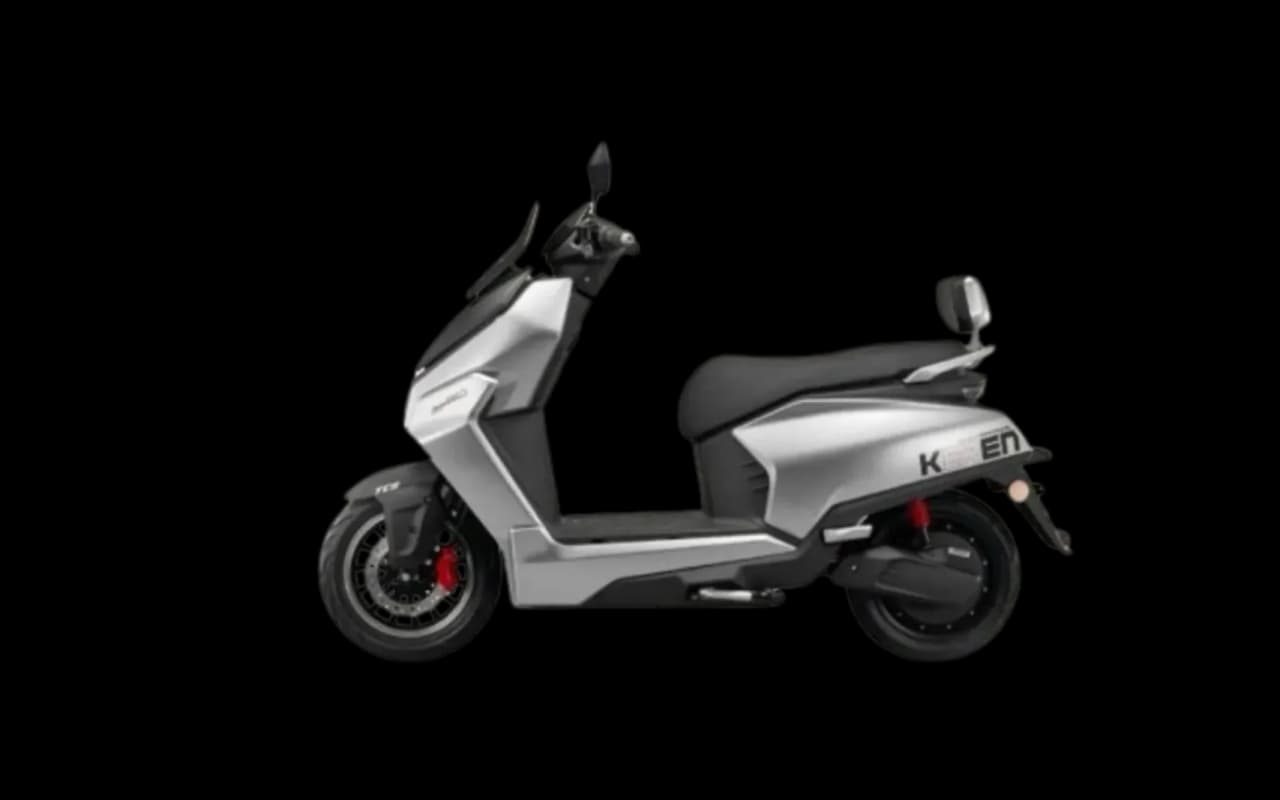
The Blaze Pro follows a modern electric scooter design language, with a neat, contemporary stance rather than an aggressively styled body. It is part of the Blaze family, but the Pro clearly reads as the more practical, longer-range version of the line-up rather than a cosmetic spin-off.
The scooter rides on 12-inch front and rear wheels, which is a useful clue about its intended use. Smaller wheels can help keep the package compact and manageable in traffic, while still giving the rider enough confidence for broken city roads and mixed suburban use. The overall dimensions are listed at 1900 mm long, 760 mm wide, and 1170 mm high, which places it firmly in the compact urban scooter class.
One thing to note is that several chassis details are not officially disclosed. The wheelbase is not published, and the exact under-seat storage volume is also not stated. That does not make the scooter unusable, but it does leave a gap for buyers who like to compare packaging precision across rivals.
Features and equipment
This is one of the Blaze Pro’s strongest areas. The 3.7 kWh variant includes a full-colour digital display cluster, One Tap Start, reverse mode, slope hold or auto hold, traction control, and CBS with hydraulic disc brakes at both ends.
That is a respectable equipment list for a scooter in this price band. The full-colour display gives it a more modern feel, while One Tap Start adds a convenience touch that suits daily commuting. Reverse mode is especially helpful in tight parking spots or awkward home driveways, and slope hold makes the scooter less stressful to manage on inclines or stop-start hills.
Traction control is a notable addition at this level because it is not always part of the standard equipment story in the budget EV scooter space. In a market where many buyers use electric scooters year-round and in varied road conditions, that safety-and-control layer adds real appeal.
What is not disclosed is just as important. There is no official mention of ABS, and no airbag-equivalent system is claimed. There is also no advanced connected-tech package or branded infotainment suite, so buyers should think of the Blaze Pro as a practical EV rather than a gadget-heavy one.
Motor, battery and performance
The 3.7 kWh version uses a 74V 50Ah LFP battery paired with a K-Tech DILU hub-drive motor. Official figures list rated power at 4000W and peak power at 5000W, with an automatic transmission and rear hub motor layout.
On paper, the performance is well matched to the scooter’s commuting purpose. The claimed top speed is 85+ km/h, which is enough for urban roads and many ring-road style runs, while the claimed range of 130–150 km per full charge is the headline number that gives the Blaze Pro much of its market logic. For a scooter at this price, that range claim is the feature that will draw the most attention.
The LFP battery chemistry is also worth highlighting. Compared with other battery approaches, LFP is generally viewed as durable and thermally stable, which suits riders who want a long-life, low-drama ownership experience. The trade-off is that buyers are often more interested in real-world consistency than in dramatic performance claims, and the Blaze Pro appears to be built around exactly that mindset.
Charging time is listed as 0–80% in 3.5 hours, which is practical for home or workplace charging routines. That is fast enough to keep the scooter in regular service without demanding a complicated charging habit.
Ride, handling and comfort
The Blaze Pro’s compact dimensions, 12-inch wheels, and rear hub motor layout suggest a scooter tuned for ease of use rather than sporty dynamics. For Nepali urban riding, that can be a sensible choice. A scooter like this should feel approachable in traffic, easy to place through narrow lanes, and straightforward to park.
Ground clearance is described as higher than the Blaze graphene model, which is encouraging, but the exact figure is not officially disclosed. That limits a more precise judgment. Still, the positioning suggests Keren and its distributor are aware of local road conditions and are trying to make the scooter better suited to rough patches, ramps, and uneven city surfaces.
The 180 kg maximum loading capacity is another practical point in its favour. That is a useful figure for riders who may carry a passenger, shopping, or work-related loads. Combined with the claimed storage space under the seat, the Blaze Pro looks like a scooter designed around real commuting life rather than showroom spec-sheet theatre.
Practicality and running costs
This is where the Blaze Pro makes its strongest case. A claimed 130–150 km range, low running costs inherent to electric scooters, and a battery chemistry aimed at longevity all add up to a compelling ownership proposition for high-use riders.
The under-seat storage is said to be generous, with enough room for daily groceries or a helmet, even though the exact capacity is not published. That makes the scooter easier to live with than some EVs that look practical but fall short on storage.
The limited service network is the main practical caution. With two service centres in Nepal, support is present, but not broad. That is acceptable for a niche EV brand in an early market stage, yet it is still a factor buyers should weigh if they live outside the main urban corridors.
Running costs should remain the Blaze Pro’s natural advantage. Electric scooters usually win on per-kilometre cost, and this model’s range and battery spec make it particularly suited to riders who want fewer charging stops and less day-to-day fuel anxiety.
Price, variants and which one to pick
There is one clearly verified variant in Nepal: the 3.7 kWh model at Rs 2,80,000.
The broader market chatter around the scooter suggests there has been some movement in effective transaction pricing, with an indicative cash discount or launch adjustment making it feel more competitive than an earlier higher positioning. For most buyers, though, the headline figure remains Rs 2.8 lakh ex-showroom.
If you are choosing this scooter, the answer is simple because the line-up is simple. The 3.7 kWh version is the one to buy, and it is the only officially established variant in the data set here. Its combination of range, features, and battery type is what defines the Blaze Pro proposition.
How it compares with its real rivals in Nepal
The Blaze Pro’s closest rivals are other electric scooters in Nepal that chase practical urban range, value pricing, and daily usability rather than premium branding. It competes most directly with budget-to-mid-range EV scooters that promise similar commuting flexibility, but many of those alternatives either lean harder on branding or arrive with less complete safety and convenience equipment.
Against typical rivals in this space, the Blaze Pro’s strengths are easy to identify:
- It offers a strong claimed range for its price bracket.
- It uses LFP battery chemistry, which should appeal to longevity-focused buyers.
- It includes traction control, slope hold, reverse mode, and dual hydraulic discs with CBS.
- It keeps the overall package compact and city-friendly.
Its weaker points are also clear:
- The brand does not have the same depth of market presence as larger names.
- Key chassis details like wheelbase are not officially disclosed.
- The service footprint is still limited.
- It does not market itself as a tech-forward connected scooter.
So while some rivals may beat it on showroom familiarity or perceived resale confidence, the Blaze Pro has a strong argument on the numbers that matter most to commuting buyers: range, charging convenience, and an equipment list that feels more thoughtful than bare-bones.
Verdict: who the Keren Blaze Pro suits
The Keren Blaze Pro is a sensible, well-judged electric scooter for Nepali buyers who value range, practicality, and low running costs more than badge prestige. Its 3.7 kWh variant at Rs 2.8 lakh offers a convincing blend of claimed 130–150 km range, 85+ km/h top speed, LFP battery durability, and a feature set that includes traction control, slope hold, reverse mode, and dual disc brakes.
It suits city commuters, suburban riders, and anyone looking for an EV that can handle longer daily use without constant charging anxiety. It also makes sense for buyers who want an EV that feels properly equipped without drifting into expensive territory.
The caveat is support depth. With one showroom and two service centres, ownership confidence will depend partly on where you live and how comfortable you are with a smaller distributor footprint. But judged on the scooter itself, the Blaze Pro looks like one of the more credible range-first EV options in its class.
Explore full specifications, variants & ownership context
Know the product
Key specifications, features & ownership context
Choose a variant to see its recorded specifications and features. Equipment and prices can change across trims.
Latest catalog and directory records supplement the original analysis. Figures may have changed since publication; individual specification and price-check dates appear below.
Rs 2.8 lakh ex-showroom · source-check date not recorded
Battery & charging
| Specification / feature | Blaze Pro 3.7 kWh |
|---|---|
| Battery | 3.7 kWhResearched · confirm · 15 Sept 2026 |
| Claimed range | 130 km (test cycle not recorded)Researched · confirm · 2 Oct 2026 |
Brakes, tyres & suspension
| Specification / feature | Blaze Pro 3.7 kWh |
|---|---|
| ABS | CBSResearched · confirm · 15 Sept 2026 |
Dimensions & weight
| Specification / feature | Blaze Pro 3.7 kWh |
|---|---|
| Ground clearance | 160 mmResearched · confirm · 2 Oct 2026 |
Claimed range uses the stated test cycle. Different cycles are not a like-for-like range comparison; actual range depends on roads, load, speed and weather.
Showroom & service support
Distributor: Evoque Nepal Pvt. Ltd.
2 listed brand showrooms · 2 listed brand service locations
Listed cities include Kathmandu.
Brand-wide directory coverage. Confirm that your nearest workshop supports this exact model, powertrain and warranty work; ask about parts availability and booking time.
Market buzz & buyer priorities
Compiled discussion, including buyer reactions and ownership reports; this is not a verified owner survey or a reliability score. Research dated 27 Sept 2026.
What people like
- Aesthetic design mirrors premium classic European scooters
- Competitive pricing for a dual-battery or high-range electric setup
- Quiet motor operation and smooth initial acceleration
Concerns to investigate
- Potential difficulty in sourcing body parts after minor accidents
- Limited brand presence and service network outside of Kathmandu
- Uncertainty regarding the long-term durability of the battery pack
What buyers ask for
- Ground clearance for navigating monsoon-damaged roads
- Availability of service centers and spare parts
- Total cost of ownership compared to petrol scooters
More feedback
- Real-world range on Kathmandu traffic, hills and two-up riding
- Ground clearance for speed breakers and uneven roads
Nepal ownership context
- EV tax subsidies in Nepal make this model significantly cheaper than 125cc petrol alternatives
- Performance on steep Kathmandu inclines is a primary concern for potential buyers
- Charging via standard 15A home sockets is the primary method used by owners here
More feedback
- Its 160 mm ground clearance is suited to Kathmandu speed breakers, broken roads and uneven urban routes.
- The 3.7 kWh LFP battery, charging time and real-world range on hills, with two riders and in stop-and-go traffic remain important Nepal-specific buying considerations.
- Service and spare-parts support are still developing compared with longer-established scooter brands in Nepal.
Use these facts alongside the article’s full analysis. Check the final quotation, warranty terms and exact equipment before booking.
Evidence & next steps
Check the details before you buy
Use this guide to build a shortlist. Ask for a written quotation for your chosen variant, including registration, taxes, insurance, finance charges and any charger installation. Confirm the nearest authorised workshop supports that model.
Price sources and dates
These are the recorded distributor-source checks for the selected overview trims. They are separate from the article update and catalog read dates; they do not mean every trim was rechecked today. Confirm the final price with the distributor.
Overview photos come from the corresponding model records. Running costs depend on usage, energy prices, maintenance, insurance and resale value.